Faceless Videos for Business: How to Run a Short-Form Channel Without a Presenter
Faceless videos let a brand post daily without anybody on camera. The formats that work, how to keep them on brand, and how to avoid the mass-produced look.

Key takeaways
- A faceless video carries its message with text, figures, charts and pictures instead of a presenter. It is the format organisations can sustain, because it never depends on one person.
- The faceless formats that work for brands are animated infographics, kinetic text cards, rankings, countdowns, offer cards and short explainers, all built to be read with the sound off.
- Faceless is not the same as mass-produced. Platforms push down interchangeable clips; a post that says something new each time, in your own design, is the opposite.
- Templates filled with real data are the reliable way to make faceless videos daily: designed once, exact every time, in every aspect ratio.
Faceless videos are short videos with nobody on camera. Text, figures, charts, product pictures and motion carry the message instead of a presenter. Creators made the format popular because it lets one person run several channels; for a business it solves a different problem. Most organisations have something worth saying every day and nobody who wants to say it on camera every day. Faceless videos for business let a brand show up daily without that person.
This guide covers why faceless works for organisations, the formats that carry it, how to keep it from looking mass-produced, and how to produce it at a daily rhythm.
Why organisations should be faceless
For a creator, their face is the moat. People follow them, and the channel is theirs.
For an organisation the same thing is a risk. Build a channel around one employee and three things can happen:
- They leave, and the channel leaves with them, or carries on with a stranger in their place.
- They get busy, and the channel goes quiet in the very weeks it should be busiest.
- They become the brand, which is fine until something they post elsewhere becomes the brand too.
A faceless channel avoids all three. It is carried by the brand’s own look and the content itself, so it survives staff changes, holidays and reorganisations. It also removes the most common reason a company never starts: nobody wants to be the face.
Faceless does not mean anonymous. A faceless channel can be very recognisable, through its colours, type, logo, sound and recurring formats. Recognition is built by consistency, not by a person.
The faceless formats that work for brands
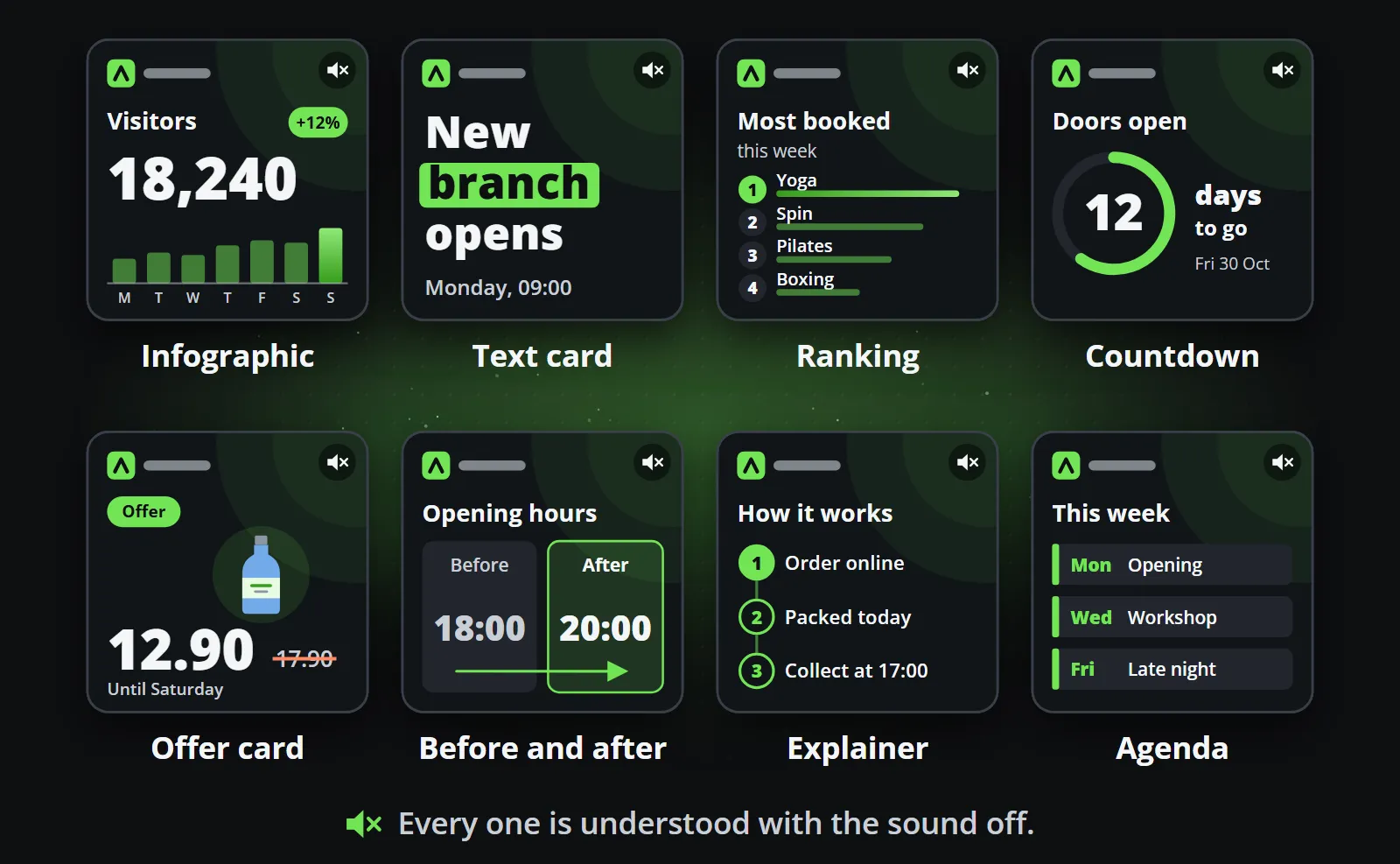
Not all faceless content is the same. These are the formats that carry information well and suit a brand:
| Format | What it looks like | Good for |
|---|---|---|
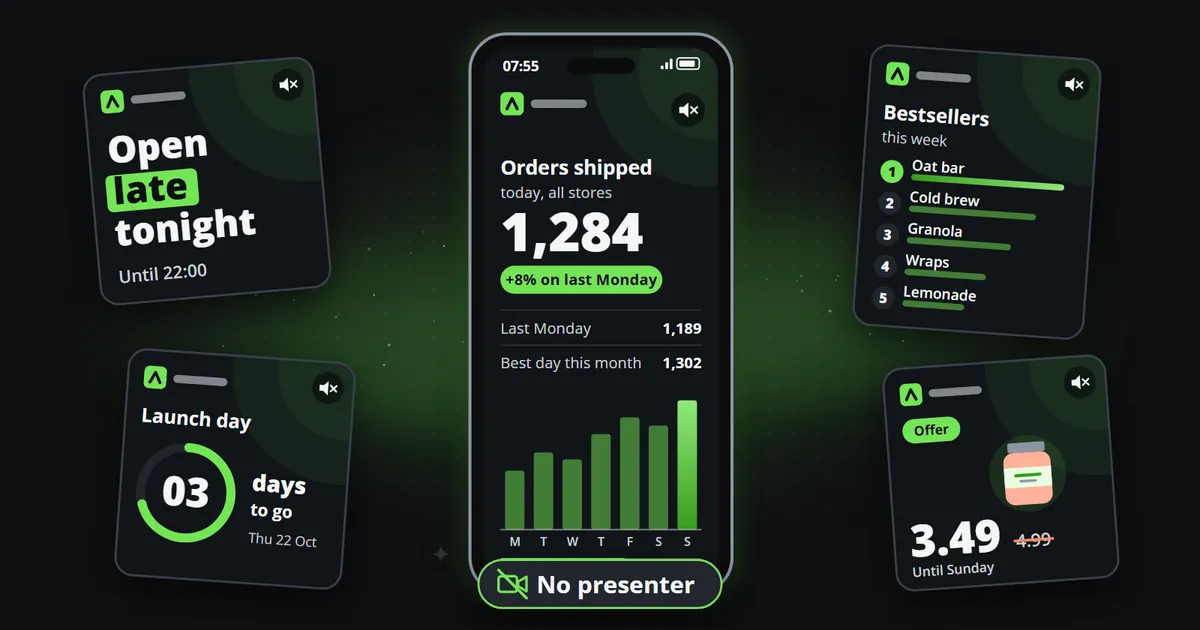
| Animated infographic | A figure counting up, bars growing, a map filling in | Results, prices, statistics |
| Kinetic text card | Bold animated text on a branded background | News, quotes, tips, announcements |
| Ranking | A list sliding into order, a bar race | Top movers, bestsellers, league tables |
| Countdown | Days or hours to an event, with the date | Launches, deadlines, events, sales |
| Offer card | Product picture, price, old price, end date | Retail offers and promotions |
| Before and after | Two states side by side | Changes, comparisons, upgrades |
| Short explainer | Three steps or three facts, one per screen | How something works, why something happened |
| Agenda or timeline | A day’s or week’s schedule | Events, fixtures, opening times, calendars |
What they have in common is that they are read, not listened to. A great deal of short-form video is watched with the sound off, at least for the first seconds, and a faceless post designed for that is understood before anybody taps for sound.
Faceless is not the same as mass-produced
This is where faceless channels go wrong, and it matters because the platforms have noticed.
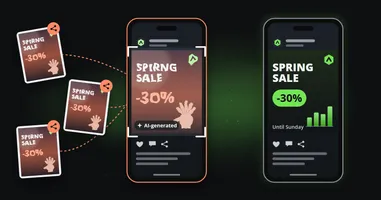
Since 15 July 2025, YouTube’s Partner Program treats mass-produced, repetitive content with little original value as “inauthentic content” that cannot be monetised. Channels of the kind that rule targets are often faceless: stock footage, a synthetic voice reading a script, the same video made a hundred times with the words swapped. Other platforms push down low-effort, repetitive content in their own ways, and audiences have a word for the generated kind: AI slop.
The rule concerns monetisation in YouTube’s Partner Program, which most brand channels do not rely on. But the habit behind it is worth taking seriously anyway: every post should say something new.
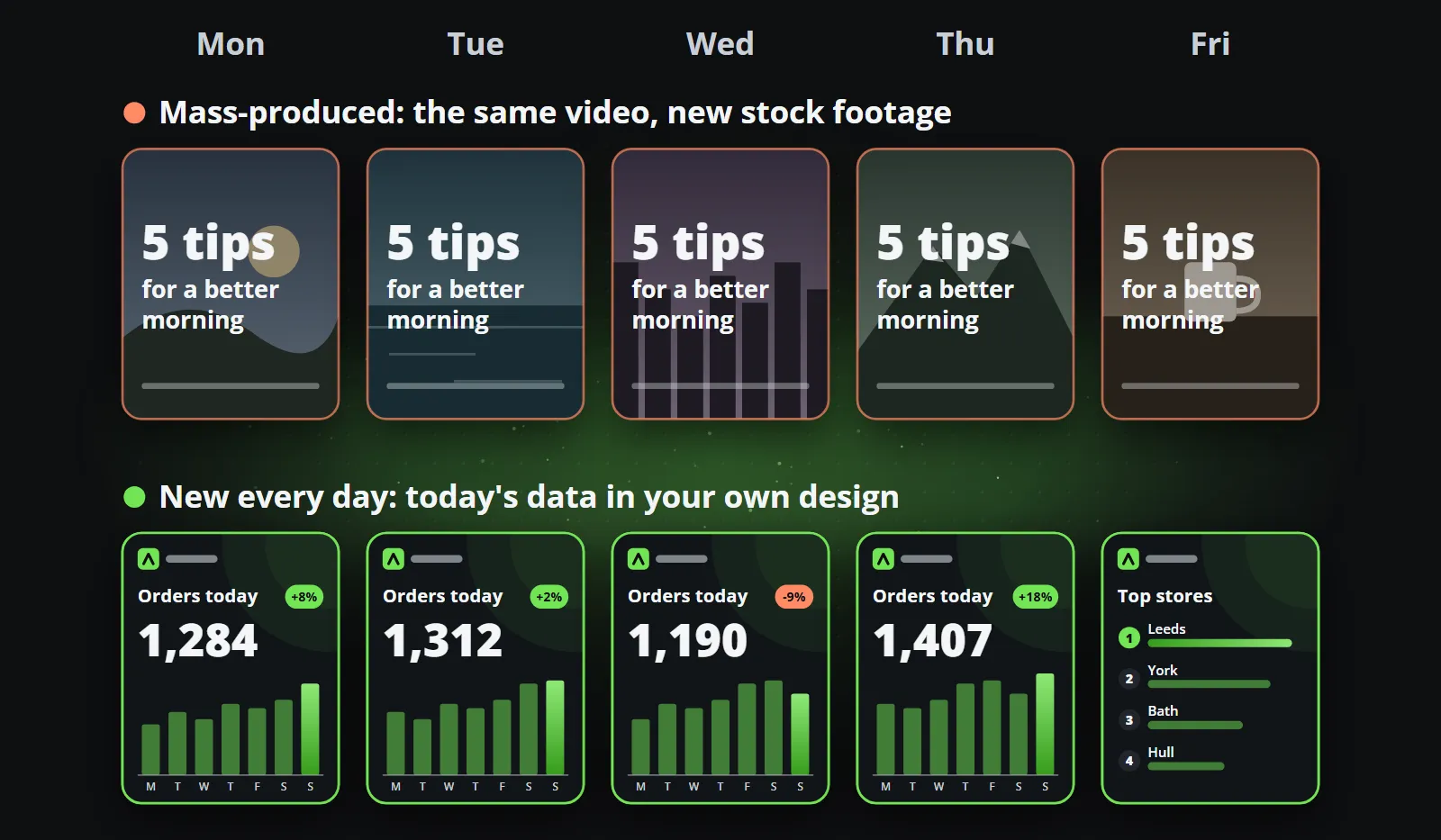
The difference between a strong faceless channel and slop is not the absence of a face. It is whether each post carries information somebody did not have before:
- Slop: the same “5 tips” video with different stock footage every day.
- Not slop: today’s figures, this week’s offers, the new release, tomorrow’s roadworks, in a design people recognise as yours.
The second kind is new every day by definition, because the data is new every day.
Keeping a faceless channel on brand
When there is no presenter, the brand has to do the work a face would do. Four habits help:
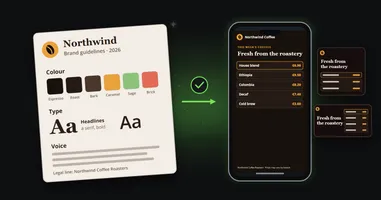
- One look, everywhere. The same colours, type and logo position in every post and every aspect ratio. A viewer should recognise the brand in the first frame, before reading anything.
- Recurring series. A daily update at the same time, a weekly ranking, a monthly review. Series give people a reason to come back and give you a rhythm.
- A hook in the first second. The figure, the change or the question goes first. The logo can wait.
- Nothing approximate. A wrong number, a misspelt name or a wobbly logo undoes a month of consistency. That is the strongest argument against generating the visual itself. Your thousandth clip should look like your first goes into why.
How to produce faceless videos every day
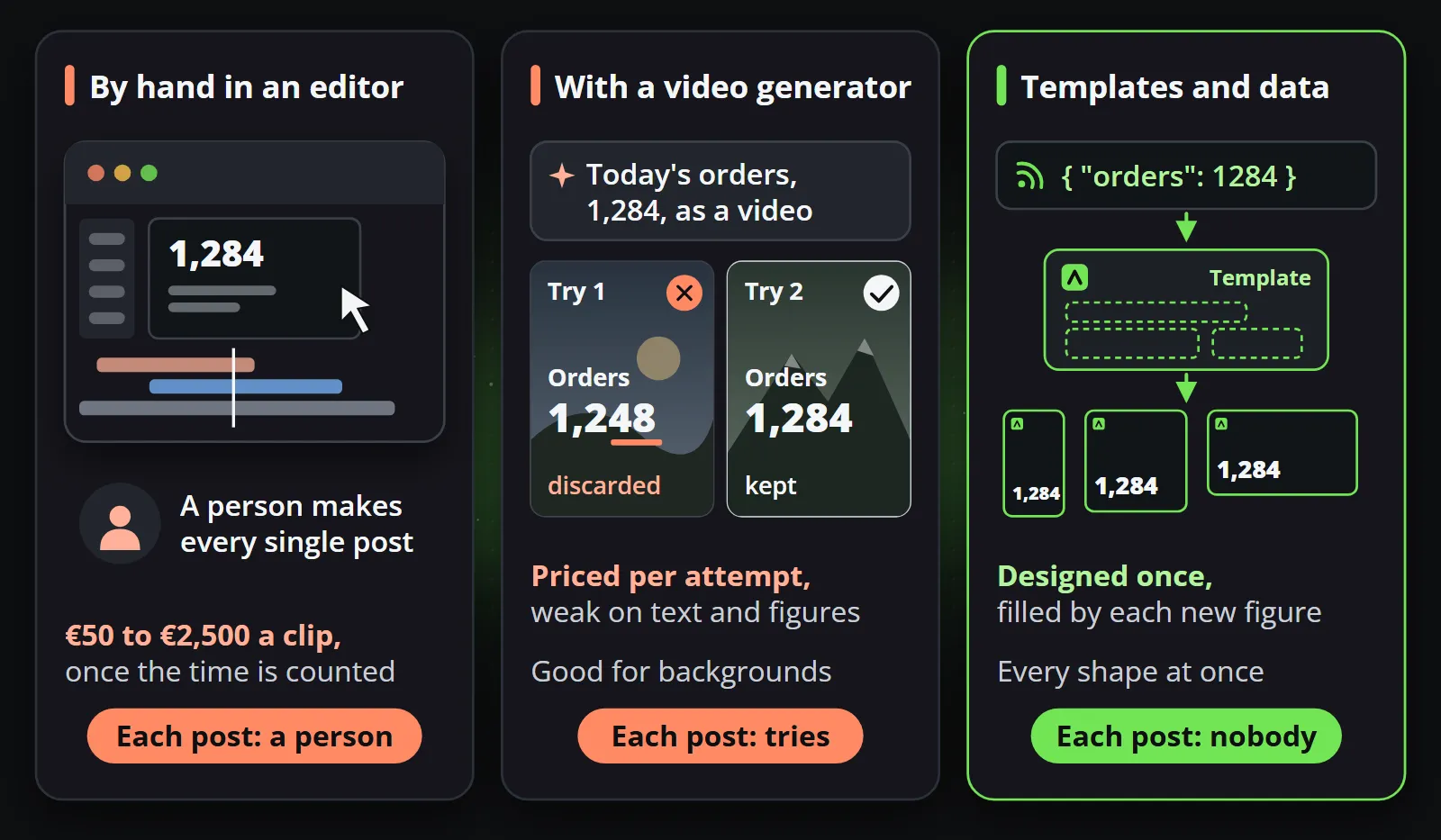
There are three ways to make faceless videos, and they differ mainly in who does the work each day.
By hand in an editor. A person makes each post in Canva, CapCut or After Effects. The quality can be high, but the rhythm depends on that person’s calendar, and a short video made by hand costs from about €50 to €2,500 once the time is counted. See what a short video actually costs.
With a video generator. Fast for footage, weak for anything with text and figures in it, and priced per attempt. A good fit for backgrounds, a poor one for the post itself. See AI video generator vs template video.
With templates filled by data. A designer builds each format once, with fields for the headline, the figure, the date and the picture. From then on, each new piece of data fills the template and the clip is drawn, in your brand, in every aspect ratio. Nobody opens an editor.
The third way is the only one where the daily rhythm costs nobody’s day, which is why Reelwire works that way. A channel listens to a source, a ready-made feed, your own system, or a list of posts somebody wrote in advance, and each new item becomes a post, handed over by email or webhook when it is due. Data to video explains the sources.
A simple faceless content plan
If you are starting from nothing, a plan like this is enough to run a channel:
| When | What | Format |
|---|---|---|
| Every weekday morning | Today’s key figure from your data | Animated infographic |
| Twice a week | A short explainer or tip from your field | Short explainer |
| Weekly | The week in a ranking or a recap | Ranking |
| Before every event or deadline | A countdown | Countdown |
| Whenever you have news | The announcement | Kinetic text card |
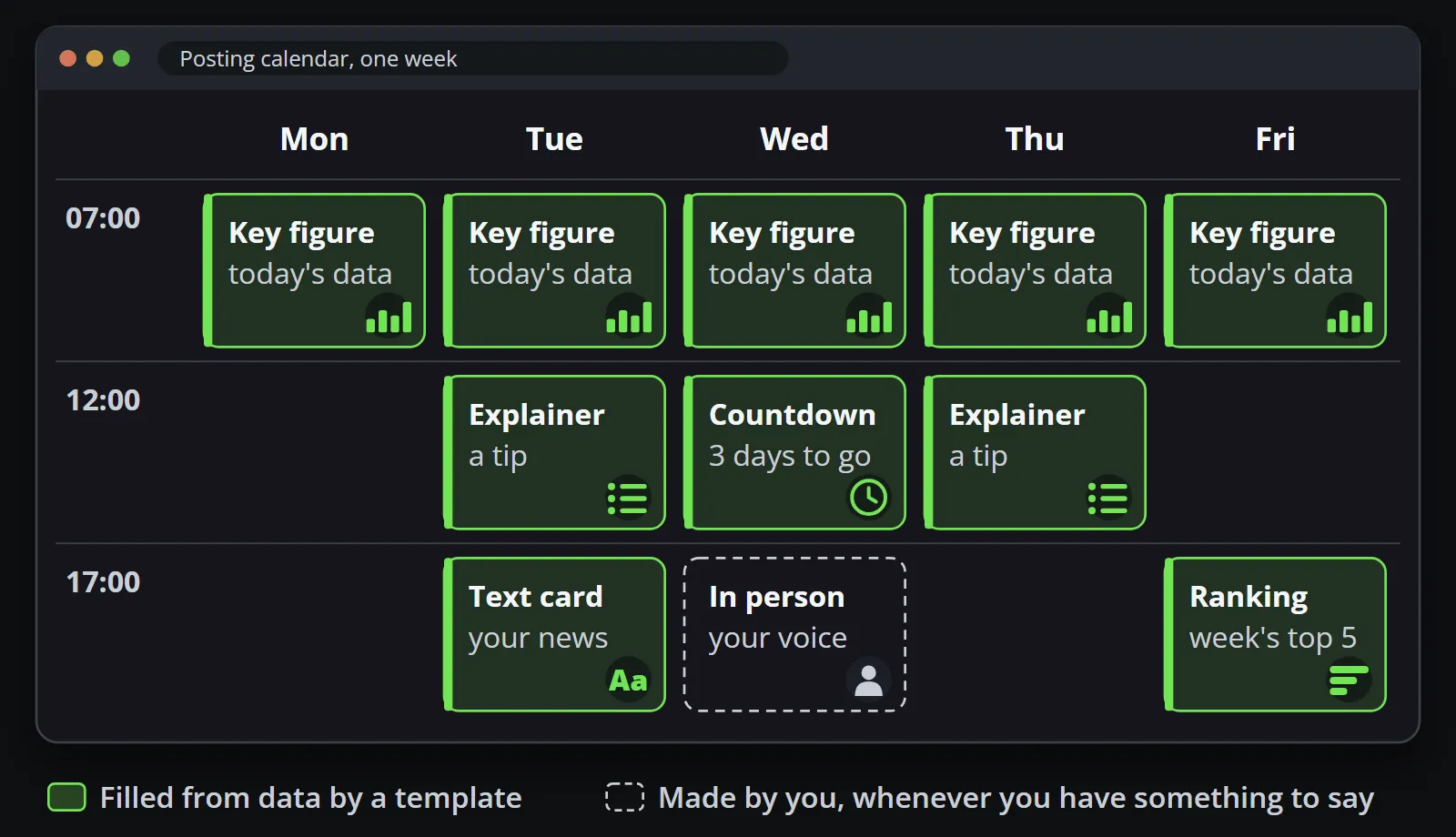
Add your own face, opinion and long-form content on top whenever you have something to say in person. Automation can carry the routine; your own voice is what makes the channel worth following, and nothing should replace that part.
Bottom line
Faceless videos let an organisation do what short-form platforms reward, show up often, without betting the channel on one person. Keep each post about something new, keep the look identical, and let templates carry the daily volume. Reelwire’s free plan is enough to try a month of faceless posts on your own data, and the use cases show what that looks like by industry.
Frequently asked questions
What is a faceless video?
A video with nobody on camera. The message is carried by animated text, figures, charts, product pictures and motion graphics, usually with music or a voice-over and on-screen text that works without sound.
Do faceless videos work for businesses?
Yes, especially for organisations that have regular news, data or offers but no person who wants to be on camera every day. Faceless posts are fast to produce, read well with the sound off, and keep working when staff change.
Will YouTube demonetise faceless channels?
YouTube's July 2025 rule on "inauthentic content" targets mass-produced, repetitive videos with little original value, not faceless videos as such. It concerns monetisation in the Partner Program. Posts that carry new information each time, in a consistent design, are a different thing from interchangeable clips.
How do I make faceless videos without AI?
Use templates: a designer builds a layout once with fields for the headline, figure, date and picture, and each new piece of data fills it. Tools such as Reelwire do this automatically from feeds, your own systems or a list of posts, in every aspect ratio.
How often should a faceless channel post?
As often as you can keep up with something worth saying, consistently. For most brands that means daily or several times a week. Regularity matters more than polish on short-form platforms, because every post starts from zero.

Co-founder of Reelwire. Every organisation has facts worth showing, its prices, results, releases and warnings, and the vision is that every one of them can show those facts every day, on brand, in every format and language, without a production team behind each post. Your data, in motion: correct, recognisable and consistent from the first clip to the thousandth.