AI Video Generator vs Template Video: Cost, Accuracy and Consistency Compared (2026)
An AI video generator invents every frame, figures included. A template draws the real ones. Cost, accuracy and consistency compared for brands posting daily.

Key takeaways
- An AI video generator is the right tool for footage: a coastline, a product in studio light, a scene that never existed. It is the wrong tool for a post whose whole point is a figure, a date or a price.
- One ten-second attempt from a leading video model costs $0.50 to $4 at list price, and a usable clip often takes more than one. A finished template video on a paid Reelwire plan costs 69 to 92 euro cents, delivered and captioned.
- A template draws the number it is sent, in your typeface, with your logo, and the same data always makes the same clip. That is what lets a template be approved once instead of every clip being checked.
- The two are not rivals for most brands. Generate a background once if you like, then let a template carry the daily volume.
Search for an AI video generator today and you will find a dozen models that can turn a sentence into a convincing ten-second shot. Search for a way to publish today’s figures as an on-brand video every morning and you will mostly find the same dozen models, which is where the trouble starts. An AI video generator and a video template both turn a few inputs into a clip, but they are built for different jobs, and for the job most brands actually have, the template wins on cost, accuracy and consistency.
This comparison is about that job: short-form video for a brand that posts often, about something specific. A price that moved, a result, an opening time, a release, a warning. Not a film.
The comparison at a glance
| AI video generator | Template video | |
|---|---|---|
| What varies | Everything, frame by frame | How the story is shown, never the facts on it |
| The figures | Drawn by the model, checked by a person | Set from your data, exact by construction |
| Your brand | Described in a prompt, followed approximately | Built into the template, followed every time |
| The same input twice | Two different videos | The same clip |
| Approval | Every video | Once per template |
| Cost per finished post | $0.50 to $4 per ten-second attempt, often several attempts | 69 to 92 euro cents on a paid Reelwire plan |
| Hardware | Graphics cards (GPUs) | Ordinary processors |
| On the platforms | Increasingly labelled as AI-generated | Drawn, not generated: nothing to declare |
The rest of this article goes through each row, and ends with when you should use which.
What an AI video generator is genuinely good at
It would be easy to write this article as a takedown, and it would be wrong. The 2026 generation of video models, Google’s Veo 3.1, Runway Gen-4.5, Kling 3.0 and Luma Ray3.2 among them, produces footage that would have needed a crew two years ago. If you need:
- a cinematic establishing shot that never existed,
- b-roll for a campaign idea you are still testing,
- a concept to show a client before anybody films anything,
- an abstract background with movement,
then a generator is fast and remarkable, and nothing else comes close at that price.
The common thread is that all of these are footage. Nothing in them has to be true. If the drone shot of a coastline shows a slightly different coastline, nobody is harmed.
What a video template is
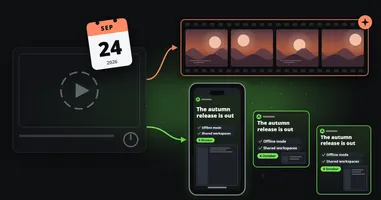
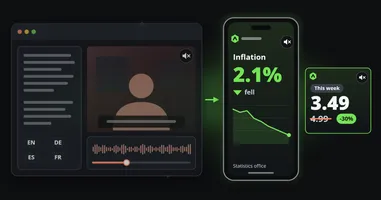
A video template is a composition designed once by a person, with named fields where the content goes: a headline, a figure, a date, a picture, a logo. Each time new data arrives, the fields are filled and the clip is drawn again. People also call this programmatic video or data-driven video.
In Reelwire, a template is a real composition built with web technology, drawn frame by frame by a browser engine on an ordinary server. It receives exactly three things: your brand (logo, colours, fonts), the channel it is for, and the content. It lays itself out for every aspect ratio your channels need, so one design produces the 9:16 Reel, the 1:1 feed post and the 16:9 video without anybody cropping anything. How that works is in one composition, every aspect ratio.
The template does not invent anything. It shows what it was sent, and refuses what does not fit: a headline that is too long is rejected by name before rendering, rather than clipped on a published video.
Cost: per attempt against per finished post
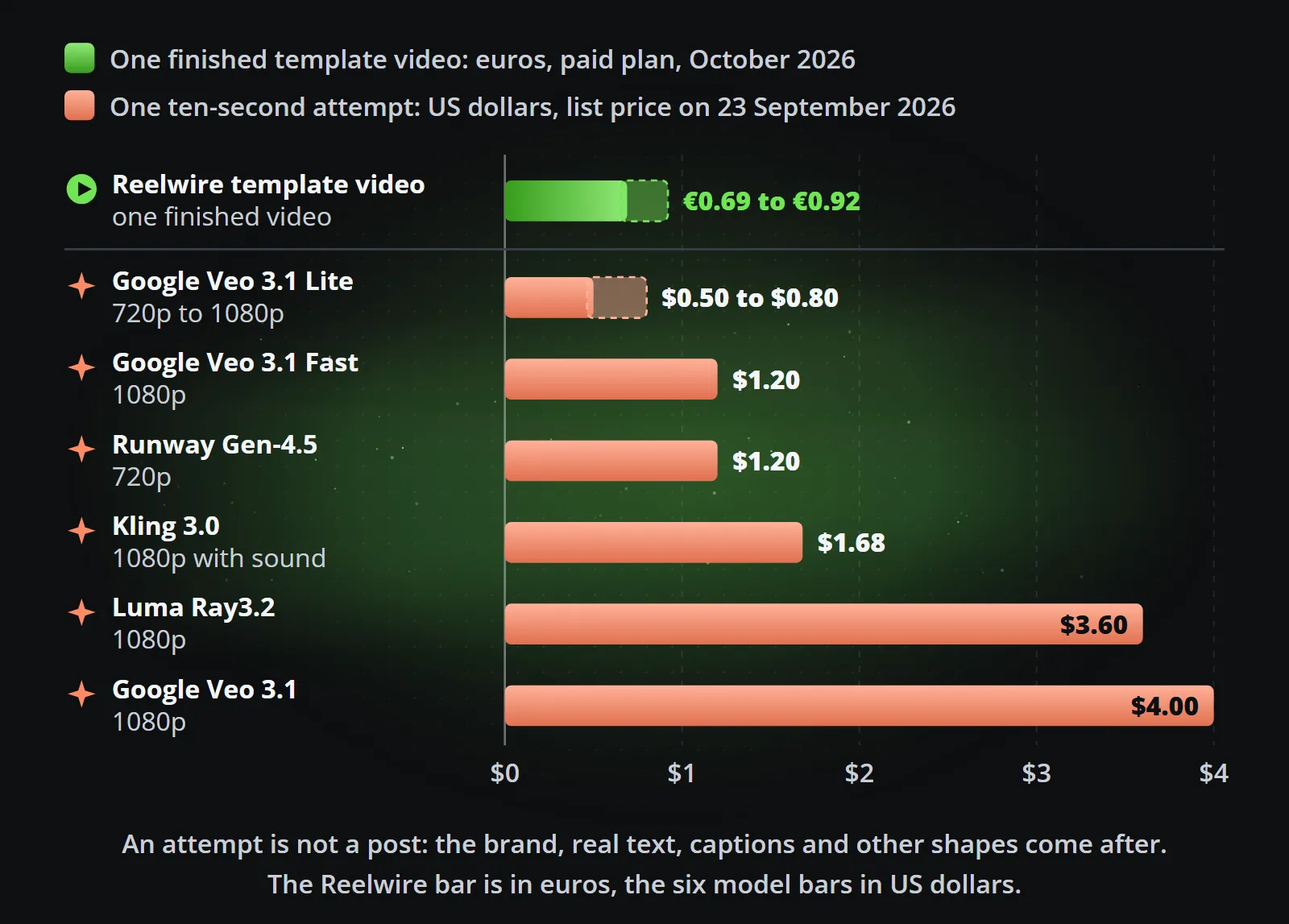
The prices of video models are public, and they are priced per second of output, on graphics hardware. Here is what one ten-second attempt cost at the vendors’ own list prices on 23 September 2026:
| Model | One ten-second attempt |
|---|---|
| Google Veo 3.1 Lite, 720p to 1080p | $0.50 to $0.80 |
| Google Veo 3.1 Fast, 1080p | $1.20 |
| Runway Gen-4.5, 720p | $1.20 |
| Kling 3.0, 1080p with sound | $1.68 |
| Luma Ray3.2, 1080p | $3.60 |
| Google Veo 3.1, 1080p | $4.00 |
Three things make the real cost higher than the table:
- Attempts are not clips. No vendor publishes how many attempts a usable clip takes, so the table assumes one. In practice people discard several: a hand with six fingers, a logo that melted, a figure that changed halfway through.
- A clip is not a post. A generated shot still needs the brand frame, the right figure in a real font, captions, a disclaimer where your industry requires one, and a version for every aspect ratio. Somebody does that by hand, which is the expensive part. More on that in what a short video actually costs.
- Some shapes cost twice. Most models generate one aspect ratio per attempt, so a vertical and a horizontal version are two attempts.
A template is drawn by a browser on an ordinary processor, the kind every web server has, with no graphics card involved, so nothing in the price depends on renting graphics hardware by the second. On a paid Reelwire plan a finished video, drawn in the shape its channel needs, captioned and handed over, works out at 69 to 92 euro cents, depending on the plan and whether you pay by the month or the year. The pricing page has the current figures, and there is a free plan of 25 videos a month that needs no card.
So the comparison is not “cheap AI against expensive designers”. A single generated attempt costs anything from a little less than a finished template video to several times more, and a usable post takes several attempts and an editor besides.
Accuracy: the number is the whole post
For a lot of brand content the figure on screen is the payload. A price that moved, a water level, an offer price, a release number. Generative models fail in exactly these places, and often:
| What breaks | Why | Why it matters |
|---|---|---|
| Logos and marks | A model reproduces something that resembles your logo: edges drift, spacing is off, colour shifts between frames | The logo is the one element that has to be identical every time |
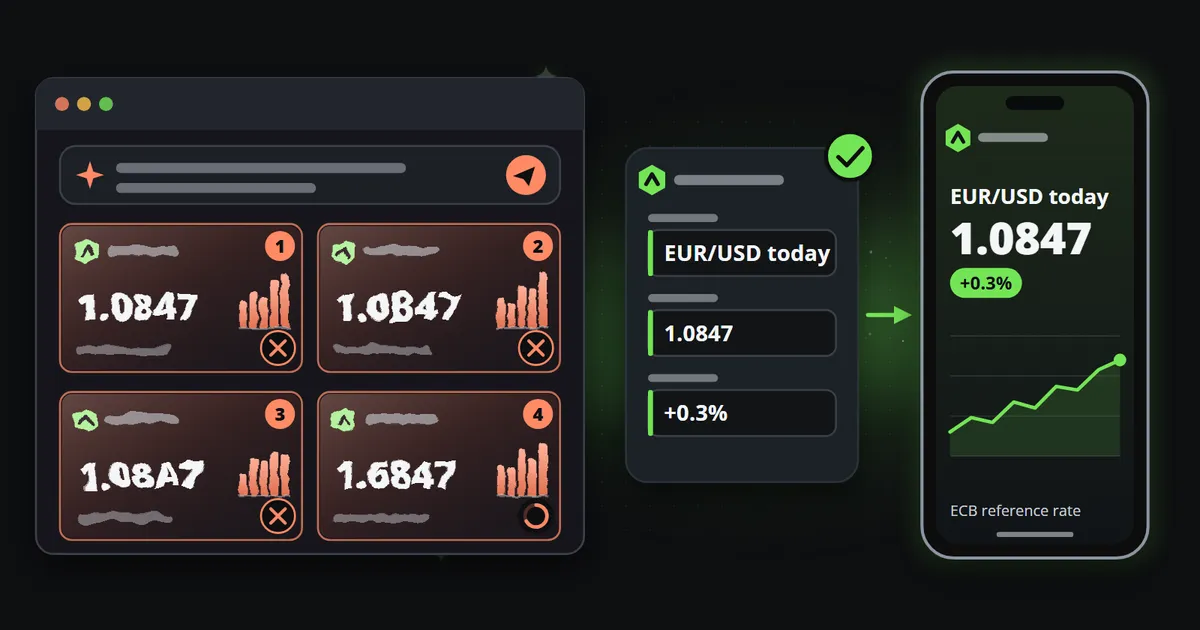
| Text and numbers | Rendered text is drawn as pixels, not set in a font; digits can change between frames | The number is the post. A wrong number is worse than no post |
| Straight lines | Axes, bars and frames wobble because consistency between frames is statistical, not geometric | Every chart is made of straight lines, and the wobble reads as generated within a second |
| Precise motion | A model produces plausible motion, not specified motion | A value counting from 1.0790 to 1.0847 over twelve frames is a specification, not a mood |
A template has none of these problems, because none of these things are generated. The logo is your file. The figure is set in your typeface from the data. The bar is a rectangle whose height is the value. The details are in what generative video still cannot do.
Consistency: the same input makes the same clip
A video model gives a different result every time, even for the same prompt. That is a feature when you want ideas, and a problem when you want a channel, for two reasons.
Recognition. A viewer scrolling past decides in a fraction of a second whether they have seen you before. A thousand clips that look like one brand build that recognition; a thousand clips that each look slightly different do not.
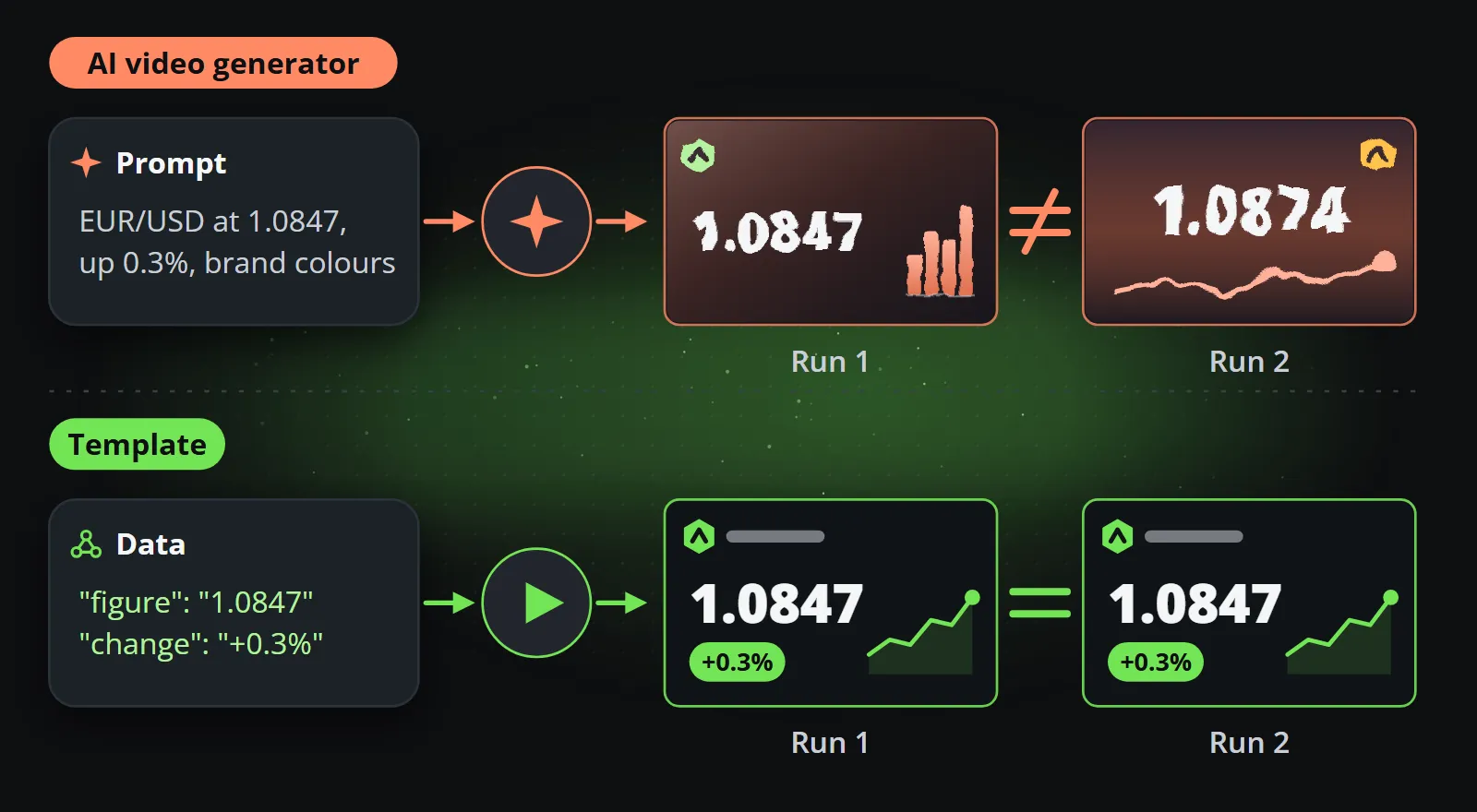
Approval. If every clip is different, every clip has to be checked by a person before it goes out, which brings back the cost the automation was meant to remove. With a template, the same data always makes the same clip, so a reviewer approves the template once and every clip made from it inherits the approval. For a regulated brand that is the difference between a control you can demonstrate and a risk you hope nobody notices. There is more on that in your thousandth clip should look like your first.
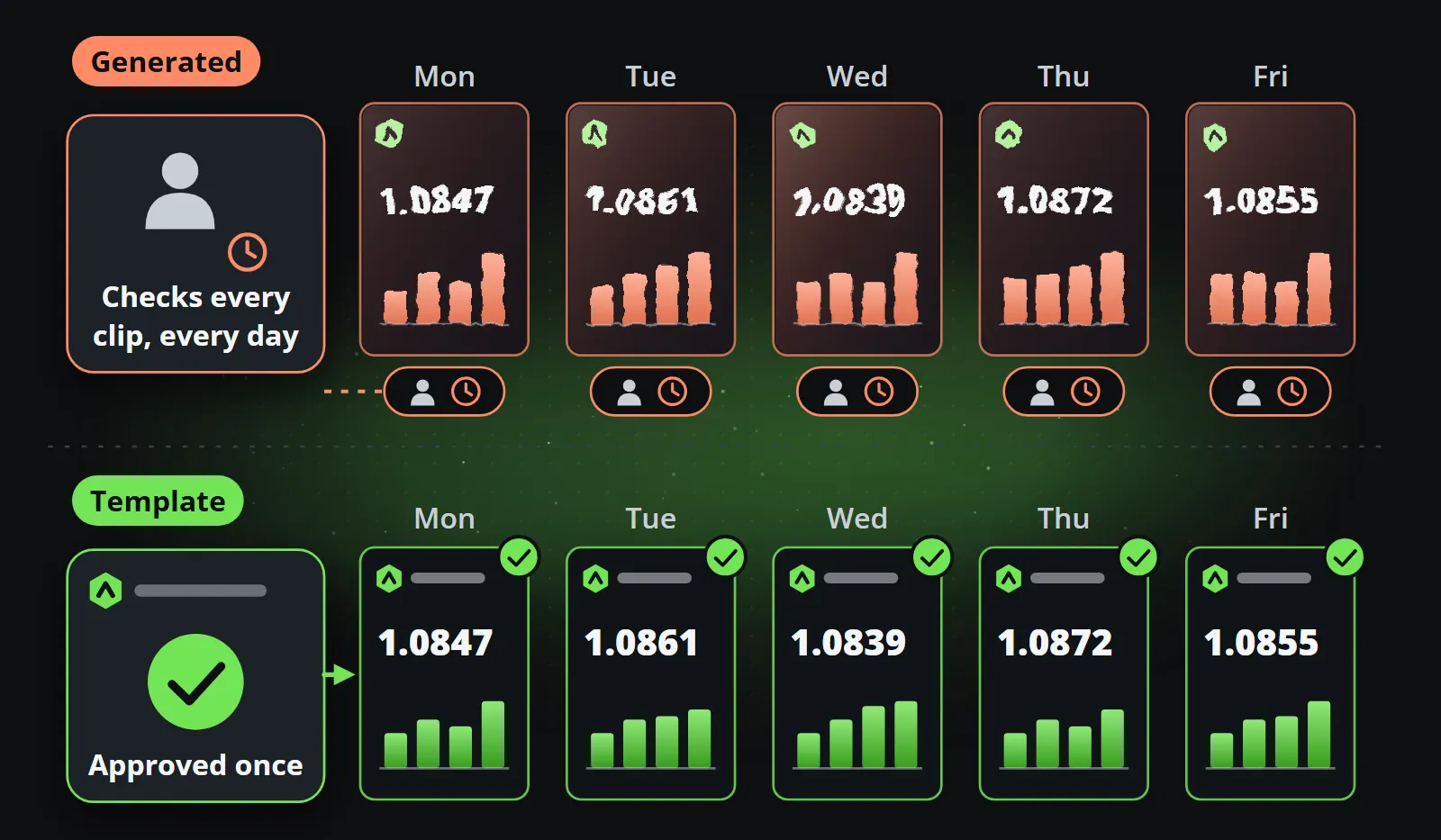
Variety still matters, and a template system does not mean every post looks identical. Reelwire varies how a story is shown, with different templates and styles for rankings, countdowns, charts and offers, while the facts on it arrive and leave exactly as they were sent.
Platform labels and the AI slop problem
Platforms now label generated media. YouTube asks creators to disclose realistic altered or synthetic content, TikTok labels AI-generated content and reads the Content Credentials (C2PA) that many tools attach, and Meta shows an “AI info” label. In the EU, the AI Act’s transparency rules add disclosure duties for deepfakes from 2 August 2026 (as of October 2026; this is not legal advice).
None of that makes generated video forbidden, and for footage a label is often no problem at all. For a brand whose content is meant to be trusted, it changes the arithmetic: a good generated clip earns no extra credit, and a bad one gets screenshotted. That asymmetry has a name now, and AI slop has its own article.
A template-drawn clip contains no generated footage, so there is nothing to label.
When to use which
| Use an AI video generator for | Use a video template for |
|---|---|
| Cinematic footage and b-roll | Daily or weekly posts built on facts |
| Concepts, moodboards, pitches | Prices, results, schedules, releases, warnings |
| One-off campaign moments | Anything that has to be approved, by compliance or a manager |
| Backgrounds with movement | Every aspect ratio and language from one design |
| Ideas you are still testing | A channel that has to keep running when you are busy |
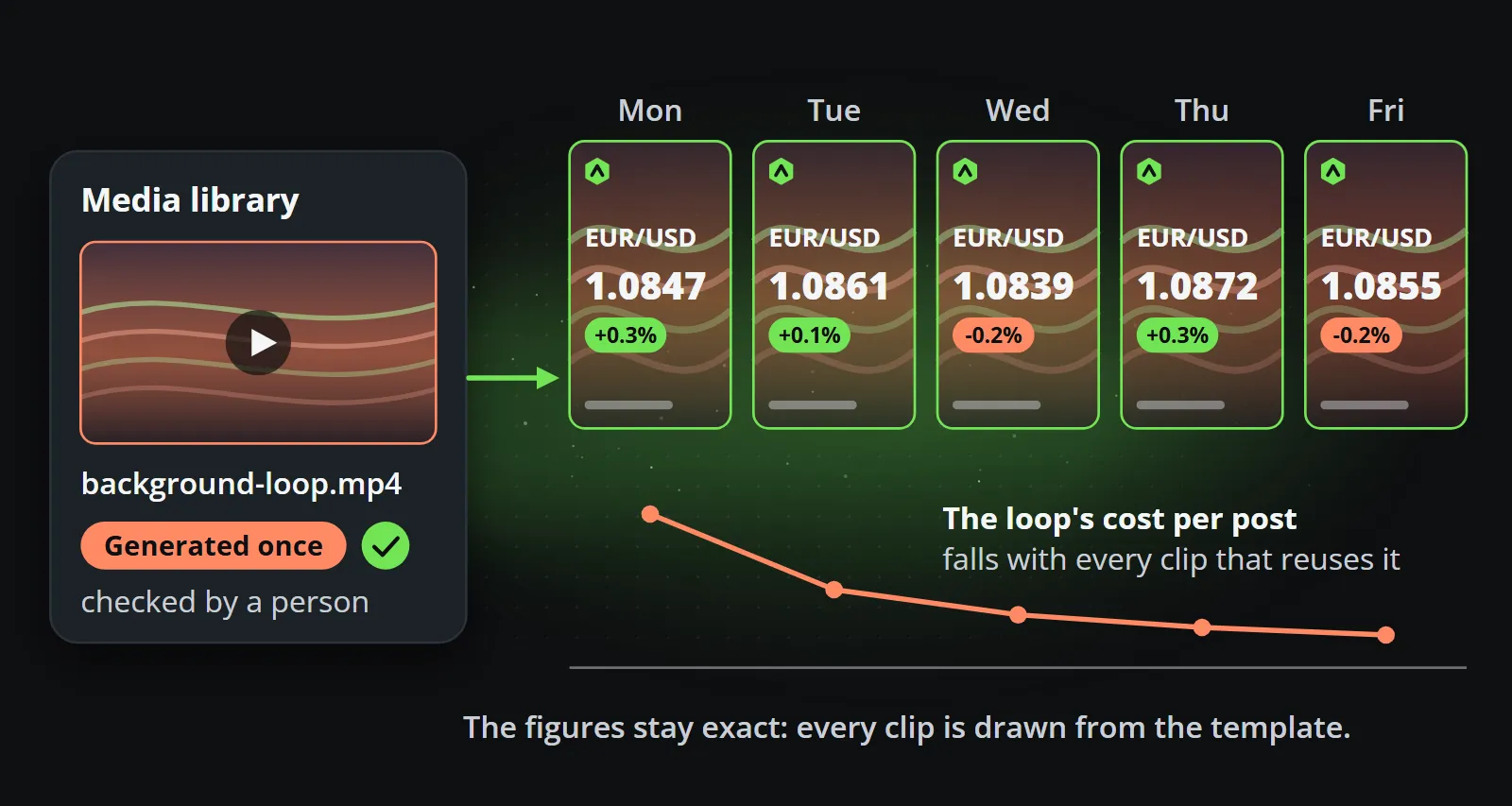
And often both. A background picture or a short loop can be generated once, kept in your media library and reused by every clip a template makes, so its cost per post falls towards nothing. Reelwire’s assistant can create pictures, music and fonts with your own AI key for exactly that reason. The clip itself is still drawn from the template, so the figures stay exact.
Where AI belongs in a template workflow
Think of it as two jobs. Choosing what is worth saying, and saying it well, is work a model does better every year: picking the story, drafting a headline that fits, choosing channels and a time. Making sure the result fits the design, looks like your brand and shows the right number is work for a template, because it has to be identical every time.
Reelwire works that way. An assistant such as Claude or ChatGPT can run your workspace through Reelwire’s MCP server, with the rights you give it, while every clip is still drawn from an approved template. MCP for video shows how to connect one.
The bottom line
If you need footage, use a generator. If you need to publish what is true, on brand, every day, use a template, and let AI do the writing around it. Both are useful; only one of them can be trusted to put the right figure on screen every time without somebody watching it first.
To see what a template makes of your own data, start on the free plan or look at real clips by industry.
Frequently asked questions
Is an AI video generator cheaper than template-based video?
Not per finished post. At list prices in September 2026, one ten-second attempt from Google Veo 3.1, Runway Gen-4.5, Kling 3.0 or Luma Ray3.2 costs between $0.50 and $4, and a usable clip often needs several attempts plus editing. A template renders on ordinary processors, and a finished, captioned Reelwire video costs 69 to 92 euro cents on a paid plan.
Can an AI video generator show exact numbers and text?
Not reliably. Video models draw text as pixels that resemble letters, and digits can change between frames. A template sets the text from data in a real font, so the figure on screen is exactly the figure that was sent.
Do social platforms label AI-generated video?
Yes. YouTube asks creators to disclose realistic altered or synthetic content, TikTok labels AI content and reads Content Credentials (C2PA) attached by many tools, and Meta shows an "AI info" label. A clip drawn from a template contains no generated footage, so it carries nothing to declare.
Is Reelwire an AI video generator?
No. Reelwire fills templates designed by people with your data and draws every frame of every clip. AI is optional and sits around the clip: you can create a logo or background picture with your own AI key, or let an assistant schedule posts over MCP.
What is template-based video?
A video built once as a composition with named fields (headline, figure, date, picture), then filled automatically with new data each time. It is also called programmatic or data-driven video, and it is how one design becomes hundreds of on-brand clips.

Co-founder of Reelwire. Every organisation has facts worth showing, its prices, results, releases and warnings, and the vision is that every one of them can show those facts every day, on brand, in every format and language, without a production team behind each post. Your data, in motion: correct, recognisable and consistent from the first clip to the thousandth.