How Often to Post on TikTok, Reels and Shorts: A Cadence a Brand Can Keep
What TikTok, Instagram, YouTube, Facebook and LinkedIn say about posting frequency, and how to pick a short-form video rhythm your team can keep up.

Key takeaways
- No platform publishes a required number. TikTok's guidance ranges from one to four posts a day for testing to "a daily post target you can consistently hit"; YouTube says there is no minimum cadence and puts quality over quantity.
- Recommendation feeds judge each video on its own, which is why frequency matters at all: every post is another chance to be shown, and a weak one costs little.
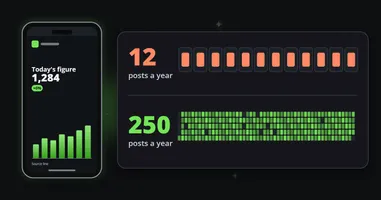
- The right frequency is the highest one your team can keep with something worth saying. As a judgement rather than a platform rule: for most brands that is between three posts a week and one every weekday.
- Series are the easiest way to post regularly: one format, one source of content and one fixed slot, so each episode is new data in a familiar frame.
How often to post on TikTok, Reels and Shorts is one of the most searched questions in social media, and the honest answer is less exciting than the numbers people quote: no platform requires a number, and the right frequency for a brand is the highest one it can sustain with something worth saying. This guide collects what TikTok, Instagram, YouTube, Facebook and LinkedIn actually say, checked on their own pages on 14 October 2026, then turns it into a rhythm a team of one, five or twenty can keep.
The argument for why steady beats occasional is made in the process makes the channel. This article is the practical half: how many, on which platforms, and how to make that number survive a busy month.
What do the platforms say about posting frequency?
| Platform | What it says | Source |
|---|---|---|
| TikTok | “Aim to post 1-4 times per day to test how different types of content are received” (advertiser advice) | TikTok for Business, 2021, updated 2023 |
| TikTok | Set “a daily post target you can consistently hit” | TikTok Creator Academy |
| TikTok | “You don’t need to post daily, but creating a content schedule and sticking to it will help you build momentum” | TikTok for Business, small business guide |
| The creators with the greatest net follower growth post “on average … 10 or more reels per month” | Instagram Creators FAQ | |
| “Start by posting Reels a few times a week, and as you build your rhythm, aim for up to 2-3 times a day” | Meta for Creators | |
| YouTube | “There is no minimum posting cadence required for your videos to perform well” | YouTube Help, Shorts |
| YouTube | “Prioritize consistent quality content over a high frequency of uploads” | YouTube Help |
| “Companies that post weekly see a 2x lift in engagement with their content” | LinkedIn Pages best practices |
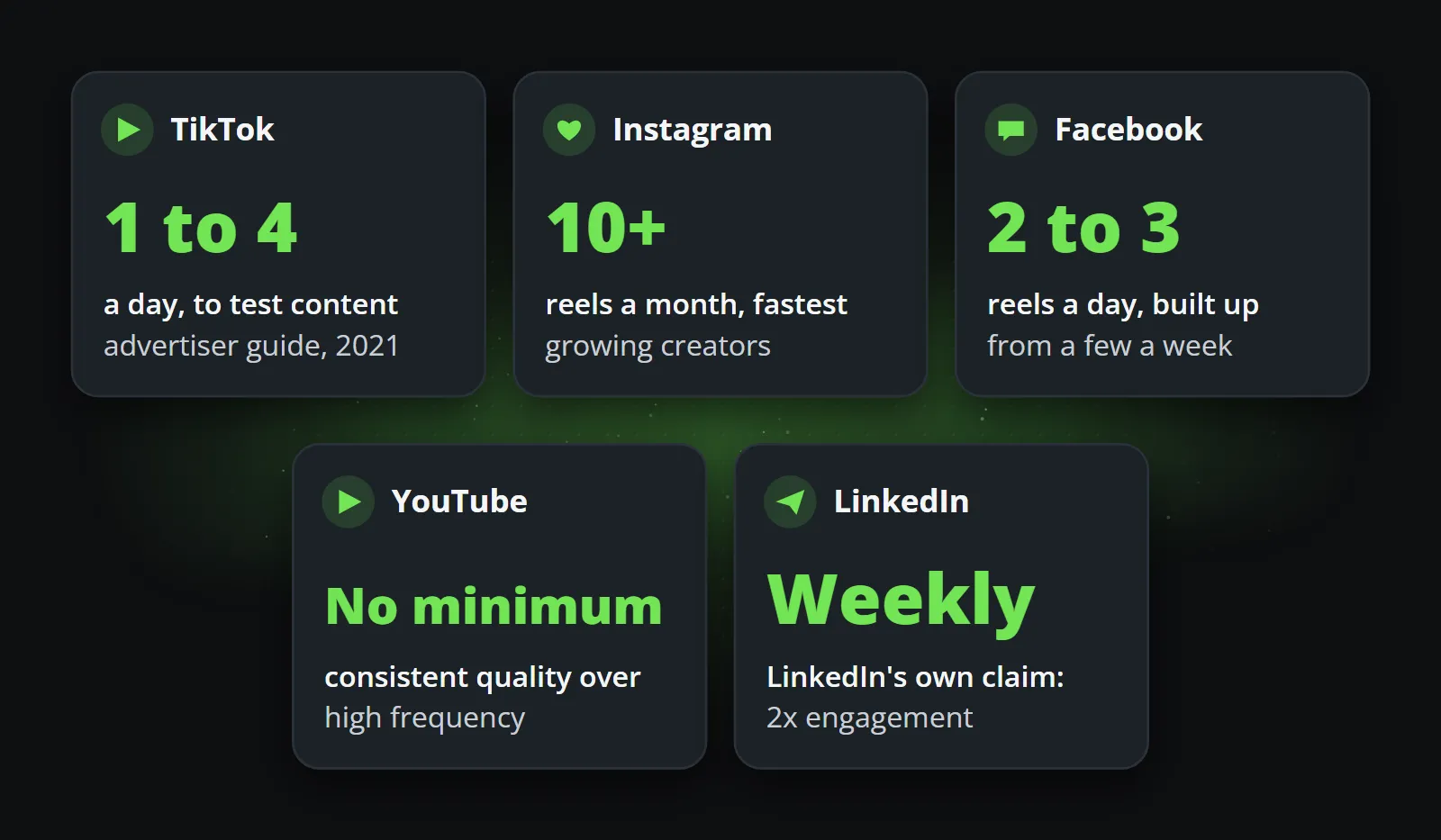
Read together, the figures are less contradictory than they look. The highest numbers come with a purpose attached: TikTok’s one to four a day is advice to advertisers on testing content before they pay to boost the winners, and Meta’s two to three a day is the end of a ramp that starts at “a few times a week”. The guidance aimed at everybody else says the same thing in different words: pick a number you can keep, and keep it.
How often should you post on TikTok?
TikTok gives three answers in three places. Its 2021 creative guide for advertisers says one to four posts a day, to find out which kind of content works. Its Creator Academy, writing for publishers, notes that those who post several times a day see more views on the For You feed, and suggests “a daily post target you can consistently hit”. Its small business guide is the most relaxed: daily is not necessary, a schedule is.
For a brand that is not a publisher, the small business guide is the one to follow. In my judgement, three posts a week is a solid start and one every weekday a strong rhythm.
How often should you post Reels on Instagram?
Instagram’s creator FAQ says how often you post new reels “is just one factor of many”, and that the creators with the greatest net follower growth post, on average, ten or more reels a month. That is an observation about fast-growing creators, not a recipe, but it gives a useful floor: three reels a week, about thirteen a month, clears it, where two a week, about nine, does not. Instagram’s creators blog adds the reason it matters: “because people often watch reels from accounts they don’t follow, every reel you post has the potential to reach a massive, new audience” (Instagram Creators blog, 26 February 2025).
How often should you post YouTube Shorts?
YouTube is the platform most explicit that frequency is not a lever by itself. Its Shorts help page says there is no minimum cadence, its upload schedule tips call “a consistent, sustainable release schedule” critical (YouTube Help), and its page on the recommendation system says taking breaks is fine because “the algorithm doesn’t penalize creators for doing so”. The same page carries the one warning about volume in this whole list: “frequently sharing content that doesn’t resonate, can, over time, affect your channel’s overall performance.”
What about LinkedIn and Facebook?
LinkedIn’s guidance for company pages is modest: posting weekly, with a reported doubling of engagement for companies that do. The page gives no method or sample, so treat the figure as LinkedIn’s own claim. Meta’s advice for Facebook creators is the most ambitious, building from a few reels a week to two or three a day.
Why does every post start from zero?
The reason frequency matters at all is how short-form feeds choose what to show. They do not mainly show you what the accounts you follow posted; they show each video to a small group, watch how it does, and decide whether to show it to more.
- TikTok: “neither follower count nor whether the account has had previous high-performing videos are direct factors in the recommendation system” (TikTok Newsroom, 18 June 2020).
- YouTube: “the algorithm uses fresh performance data for each individual video, rather than relying on past results, so a single experiment that doesn’t land won’t necessarily hinder your channel’s potential” (YouTube Help).
- Instagram, on Reels: “the majority of what you see is from accounts you don’t follow” (Instagram, 31 May 2023). Instagram does count follower numbers among its signals, so the effect is weaker there.
Two consequences follow. Every post is a fresh chance, so posting more often gives more chances, and a post that does poorly costs little beyond the time it took. A large study by Buffer, a company that sells social media scheduling, found exactly that pattern on TikTok: across 11.4 million posts from over 150,000 accounts, posting two to five times a week brought up to 17 percent more views per post than posting once a week, but “the median views per post stay pretty flat no matter how much you post”. The gain came from more chances of a breakout, not from every post doing better (Buffer, 8 October 2025). Its recommendation for most accounts: two to five posts a week.
For comparison, the median brand in Rival IQ’s 2026 benchmark of 150 companies in each of 18 industries posted 3.69 times a week on Instagram and 1.98 times a week on TikTok (Rival IQ, 5 March 2026). A brand posting every weekday is already well above the middle.
What posting frequency can your team actually sustain?
The number a platform suggests is useless if it lasts a month. The number that works is set by the hours a post takes and the hours a team has. A rough guide by team size:
| Team | A rhythm it can keep | What makes it possible |
|---|---|---|
| One person, by hand | Two to three posts a week, on one or two platforms | One series, made in a single sitting each week |
| A small team | One post every weekday | Two or three series and a post list filled a week ahead |
| A marketing team | One or two a day, across platforms | Series built from data, approval once per template |
| Automated from data | Every weekday or more, per channel | Templates fed by data; people approve and add campaigns |
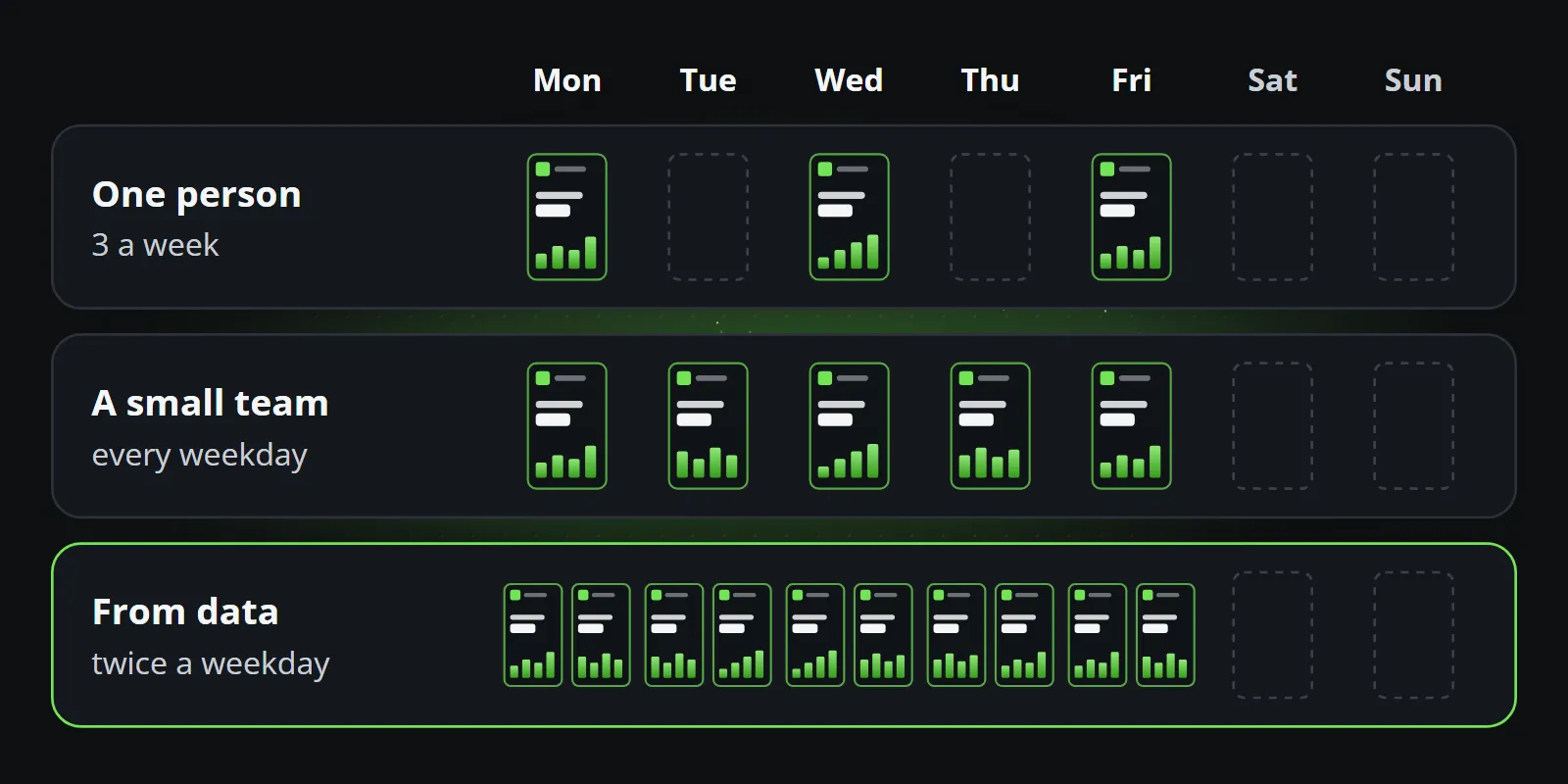
Three rules make whichever row you are in hold up:
- Count the hours per post first. Time the whole job once, from idea to upload, including checks and captions, and multiply by the rhythm you have in mind. If the total does not fit the week you actually have, pick the row above.
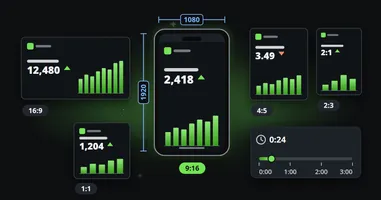
- Count every shape and platform. A post on TikTok, Reels and Shorts is three uploads, and a feed version in 4:5 is a fourth. The cheat sheet of social media video sizes shows why one post is rarely one file.
- Keep a buffer of finished posts. Two weeks of posts made ahead, or a post list filled for the coming dates, absorbs a holiday or a launch week without anybody having to make a post that day.
Series: the easiest way to post regularly
The hardest part of posting often is not making the video. It is deciding, every day, what the video should be. A series removes that decision. It has three parts that stay fixed:
- A format: the same template every time, such as a ranking, a big number, a countdown or a week’s agenda.
- A source: where the content comes from, such as sales figures, prices, results, the weather, a calendar of events or a list somebody keeps.
- A slot: the same time on the same day, so the audience learns when to expect it.
Only the data changes: it is the one thing that is new in each episode.
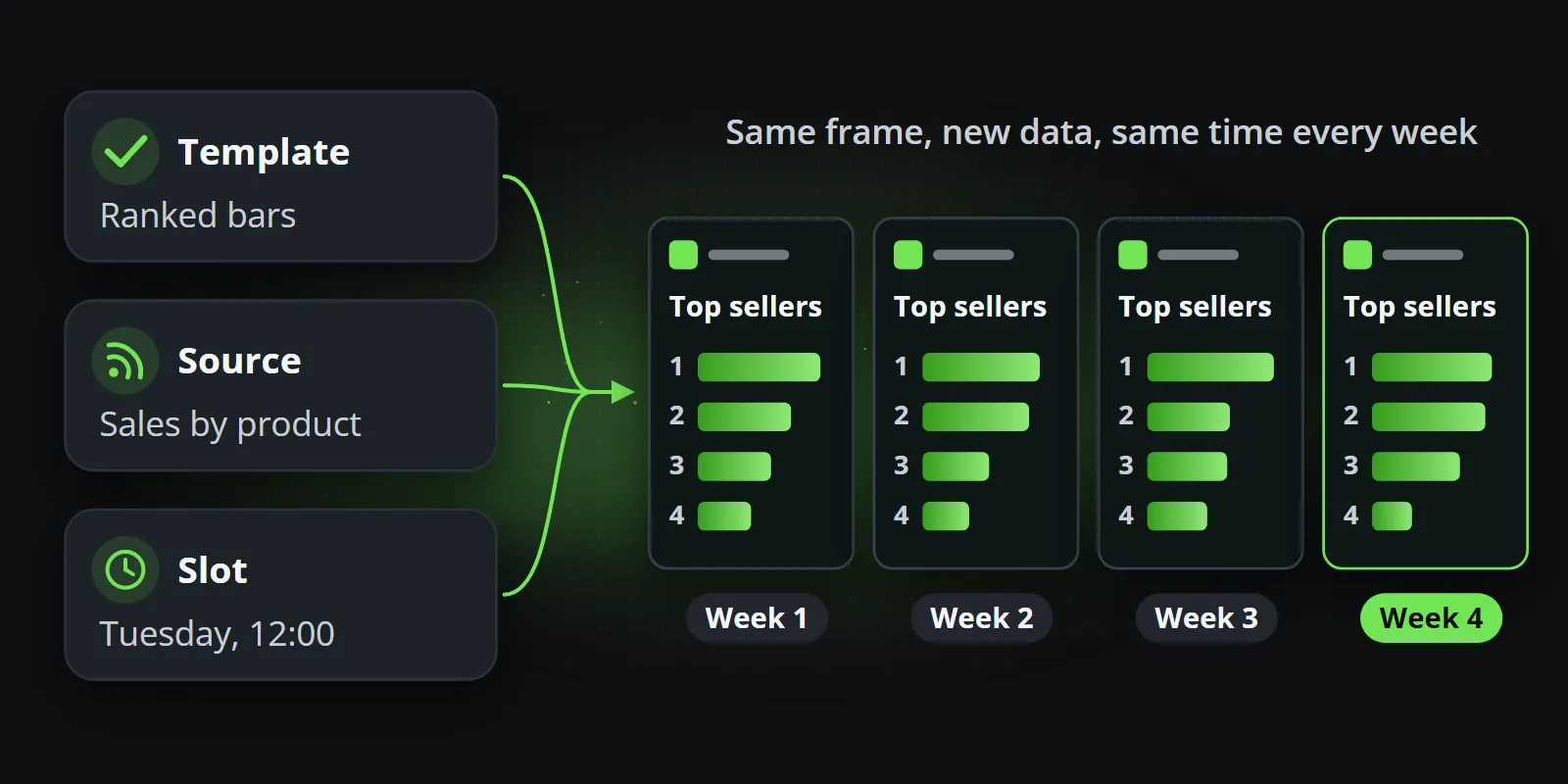
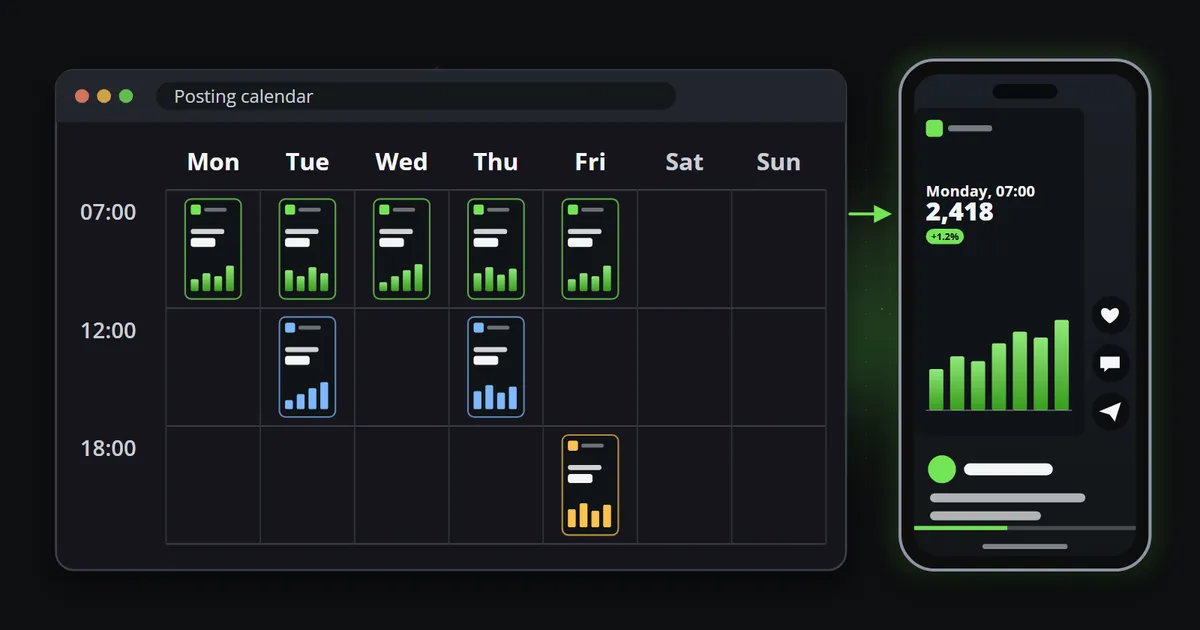
Two or three series cover most of a week. A Monday overview, a Wednesday ranking and a Friday recap is about thirteen posts a month without anybody having to have an idea on a Tuesday afternoon. They also suit the way short-form feeds work: an audience that saw last week’s ranking recognises this week’s in the first second. Faceless videos for business lists the formats that carry a series well without a presenter.
How do you know you are posting too often?
Frequency stops helping when it starts costing quality or truth. The signs:
- You are running out of things to say. Posts start to repeat themselves, or exist to fill a slot. YouTube’s warning about content that “doesn’t resonate” applies here.
- Mistakes creep in. A wrong figure, an old price or a typo in a headline costs more trust than a missed day.
- The look drifts. Rushed posts are where the off-brand colour and the squeezed headline come from. Your thousandth clip should look like your first explains why that matters more than any single post.
- The team is resentful. If the rhythm depends on somebody staying late, it will end.
The fix is rarely to post less. It is usually to change how posts are made, so that the frequency stops depending on effort.
Where Reelwire fits
Reelwire runs the series side of this: a channel listens to sources, such as ready-made feeds of live public data, your own system’s events or a post list filled in advance, each with its own release schedule, and every clip is drawn from a designed template with your brand applied and handed over by email or webhook when it is due. How it works shows the chain.
Bottom line
There is no magic number. The platforms’ own guidance points the same way: post regularly, at a pace you can keep, with content worth watching. As a judgement for most brands rather than a platform rule: three posts a week as a floor and one every weekday as a strong rhythm, built on two or three series rather than on daily inspiration.
To try a series on your own data, start with Reelwire’s free plan: 15 videos a month, no card needed.
Frequently asked questions
How often should a business post on TikTok?
TikTok does not set a number for businesses. Its small business guide says you do not need to post daily but should keep a schedule; its creator guidance suggests a daily target you can consistently hit. As a judgement rather than a rule, three posts a week to one every weekday is a realistic range for most brands.
How often should I post Reels on Instagram?
Instagram says frequency is one factor of many, and that the creators with the greatest net follower growth post on average 10 or more reels a month. That is an observation about fast-growing creators, not a recipe. Three reels a week, about thirteen a month, is above it.
How often should you post YouTube Shorts?
YouTube says there is no minimum posting cadence for Shorts to perform well, and recommends a consistent, sustainable schedule, with consistent quality over a high frequency of uploads.
Does posting too often hurt reach?
Platforms judge each video on its own, so one weak post does not sink the next. YouTube does note that frequently sharing content that does not resonate can, over time, affect a channel's performance. Post as often as you have something worth saying, not more.
Is it better to post daily or a few times a week?
Whichever your content supports. Daily suits a source that changes every day, such as prices, results or the weather; a few times a week suits news that arrives weekly. Match the rhythm to how often you have something new, then check it fits the hours you have.
Make your first clips today
The free plan makes 15 clips a month and asks for no card. Add your logo and colours, pick a template, and see a finished clip in your own brand before you decide anything.

Co-founder of Reelwire. Every organisation has facts worth showing, its prices, results, releases and warnings, and the vision is that every one of them can show those facts every day, on brand, in every format and language, without a production team behind each post. On brand, every day: correct, recognisable and consistent from the first clip to the thousandth.