Municipal Social Media: The Channel Has to Exist Before the Emergency
A warning reaches whoever already follows you. How municipalities can post useful short videos every day with a two-person office, before the emergency.

Key takeaways
- Residents moved to Instagram, Facebook, TikTok and WhatsApp. The duty to inform them did not move, and many communications offices are one to three people.
- A storm warning or a boil-water notice reaches whoever already follows the account. An account that posts twice a month has few people to reach.
- The routine daily material, collection days, roadworks, water levels, events, council decisions, is what builds that audience. It is public, it updates itself, and it can be published automatically.
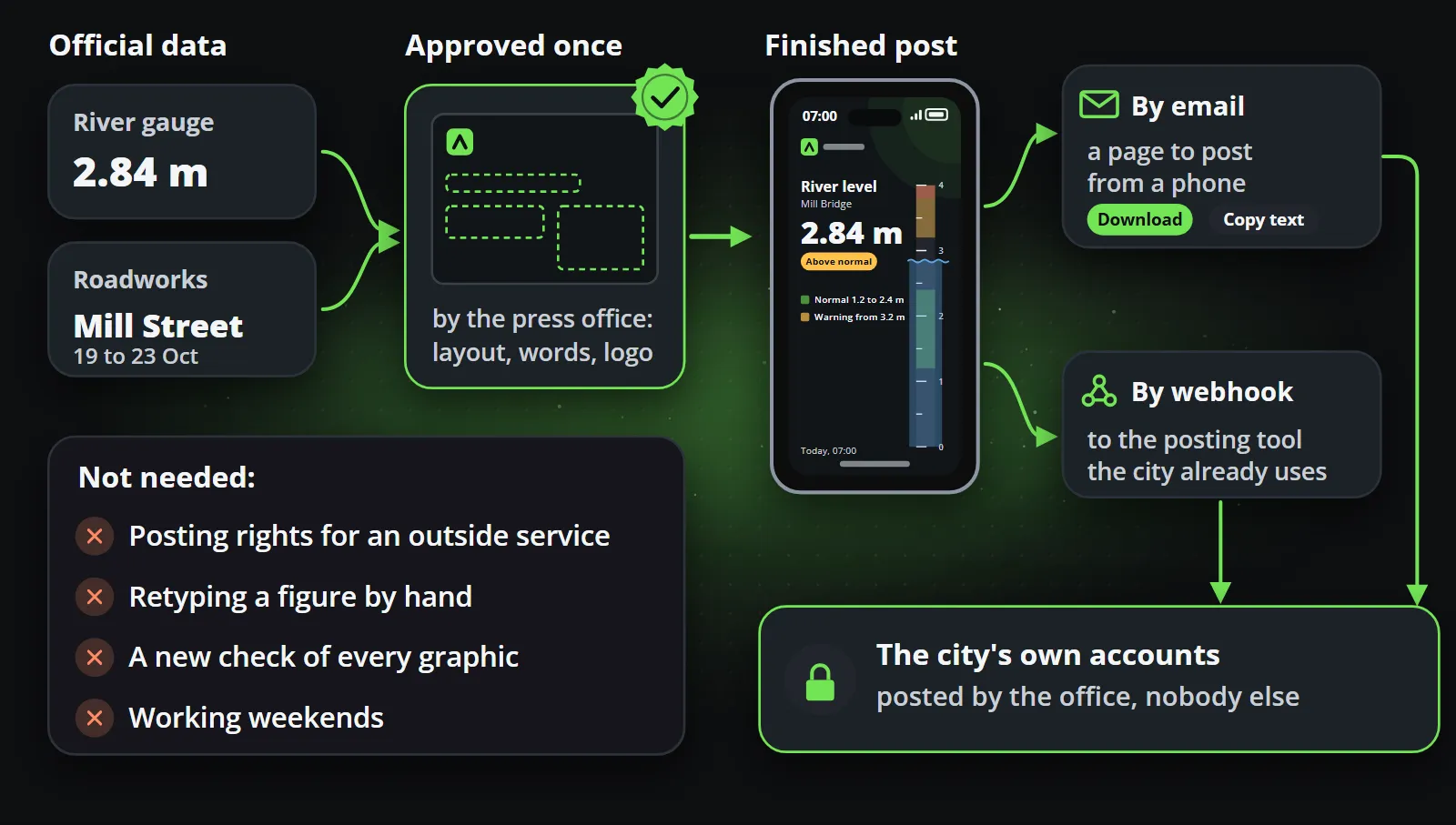
- No outside service needs posting rights on official accounts: finished posts can be handed over by email or webhook, approved once as a template.
Every municipal communications office knows the scenario. A storm warning comes in, or a boil-water notice, or a road has to close at short notice, and the message has to reach residents now. It goes out on social media, and it reaches whoever already follows the account. For a city that posts twice a month, that is not many people, and the ones it reaches have not seen a post from the city in weeks.
Municipal social media is often treated as nice to have. This article argues the opposite: the channel has to exist before the emergency, and the way to build it, with a team of one to three people, is to publish the useful routine information residents already need, every day, mostly automatically.
Residents moved; the duty to inform did not
The obligation to inform residents has not changed. Where residents look has. Many of them no longer read the printed bulletin or check the website’s news page; they are on Instagram, Facebook, TikTok, YouTube and WhatsApp, and that is where they expect to find out what is happening in their town.
Many communications offices were not resourced for that. One to three people are responsible for the website, the press, the council’s own publications and every social channel. Every graphic is still made by hand, which is why most municipal accounts post when something big happens and are quiet the rest of the time.
Why the routine posts are the important ones
Platforms tend to show posts to people who have engaged with an account before. An account that posts useful things regularly builds a group of residents who see, like and share what it publishes. When something serious happens, that group is the audience, and it is large or small depending on what the account did in the months before.
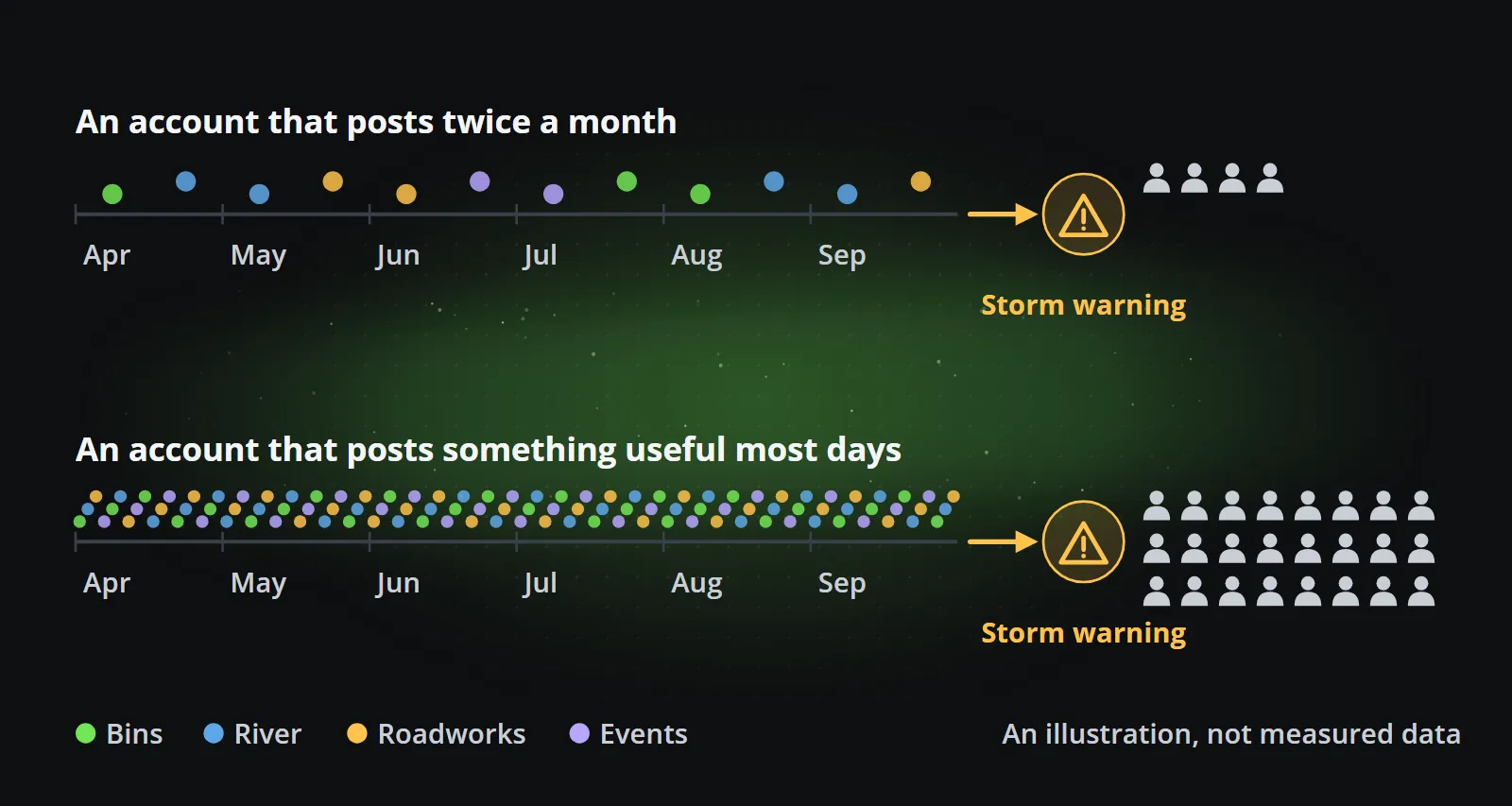
So the routine material is not filler. The bin calendar, the roadworks, the river level and the council decision are what build the audience that is there when the warning goes out. They are also genuinely useful on their own: people want to know when the green bin goes out, which road is closed tomorrow, and when the pool reopens.
What to post: daily formats that work for a city
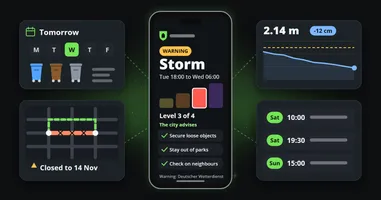
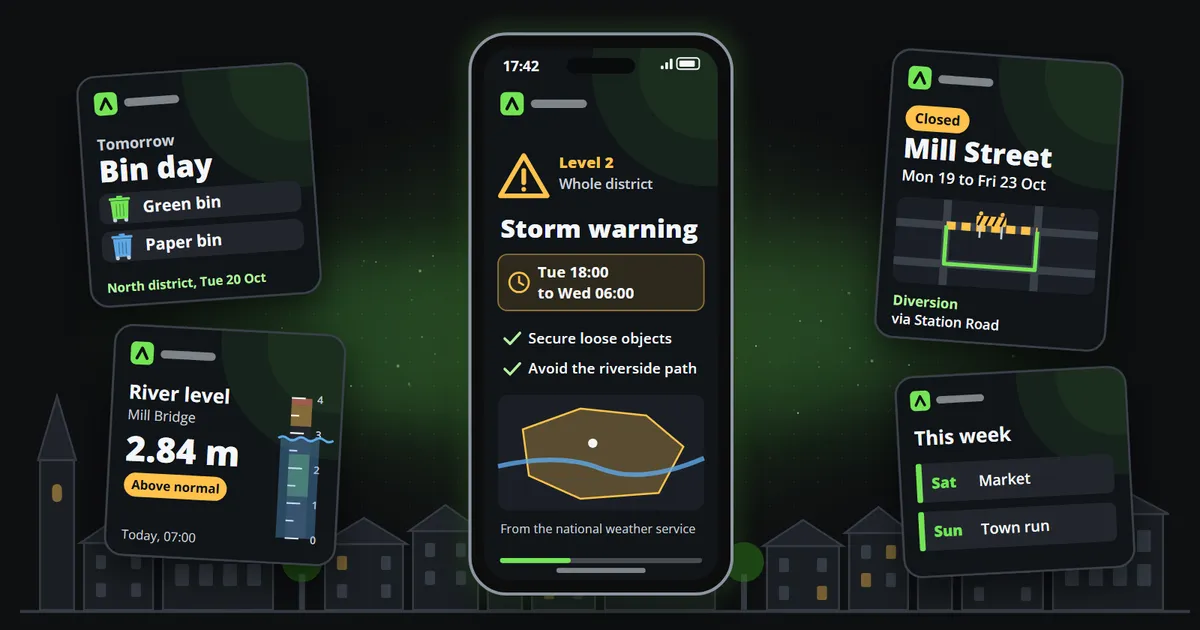
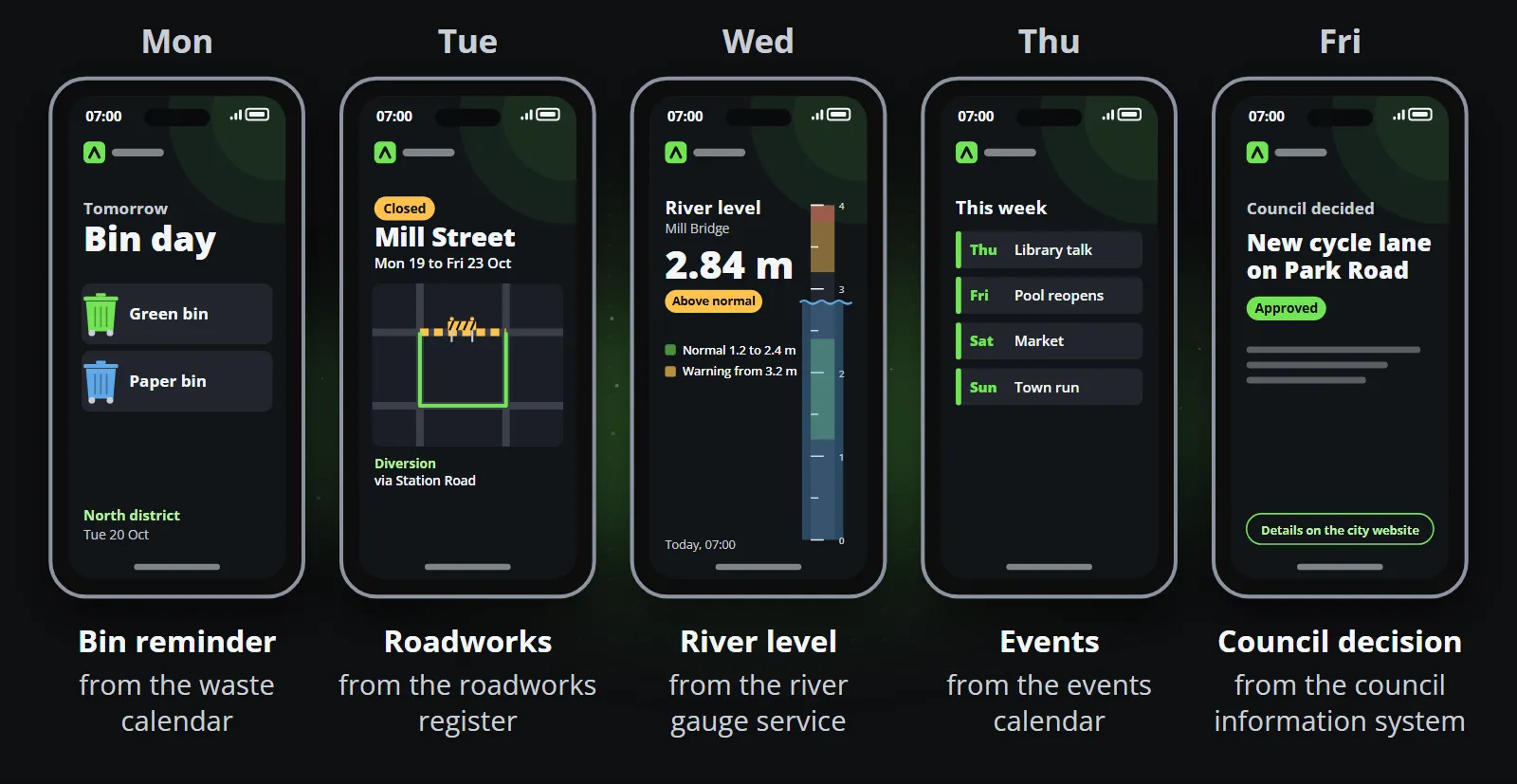
Most of what residents want to know is already published somewhere as data. These formats turn it into short videos that can be read in a second with the sound off:
| Format | What it shows | Where the data usually comes from |
|---|---|---|
| Collection reminder | Which bins go out tomorrow, by district | The waste collection calendar |
| Roadworks and closures | What closes, where, from when to when, the diversion | The roadworks register |
| Water level | Today’s gauge reading against its normal range and warning levels | The river gauge service |
| Weather warning | The warning level, the area, the time window, what to do | The national weather service |
| Transport changes | Line, stop, dates, replacement service | The transport operator |
| Opening hours | Holiday hours of offices, pools, libraries | The city’s own schedules |
| Events this week | What, where, when | The events calendar |
| Council decisions | What was decided, in one sentence, with a link | The council information system |
| Election night | Results by counting round, updated as they arrive | The returns office |
Each line is one template, designed once in the city’s colours, with fields for the values. When the data changes, the post follows.
The service page that disappeared
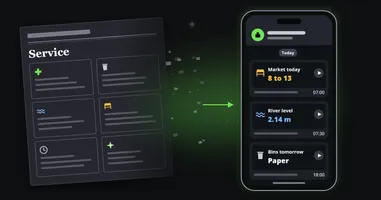
Local newspapers used to solve this problem for towns. Their service pages carried the pharmacy on duty, the bin days, the water levels, the market times and the cinema listings, and people genuinely read them. In many towns that page has thinned out or gone along with the paper. A city publishing the same kind of information on social media is not competing with anybody; it is filling a gap residents have already noticed.
Automating the routine without losing control
The objection to automation in the public sector is control, and it is the right objection. Three design choices answer it.
The template is approved once. The press office approves the layout, the wording pattern, the logo and the accessibility of each format a single time. Every post made from that template looks exactly like what was approved, because the same data always makes the same clip.
The facts come straight from the source. The water level in the video is the value from the gauge, set in the city’s typeface, not a number somebody retyped. A headline that does not fit is refused, not squeezed, so nothing half-cut is ever published.
Nobody outside the office touches the accounts. Reelwire does not need posting rights on official accounts. Finished posts are handed over by email, with a page to post them from a phone, or by webhook to whatever system the city already posts with. For sensitive channels, a person can also approve each post before it is handed over.
Granting a third party the right to post to an official account is often the step that stalls a project in a public body. Not needing it removes that step.
Accessibility belongs in the template
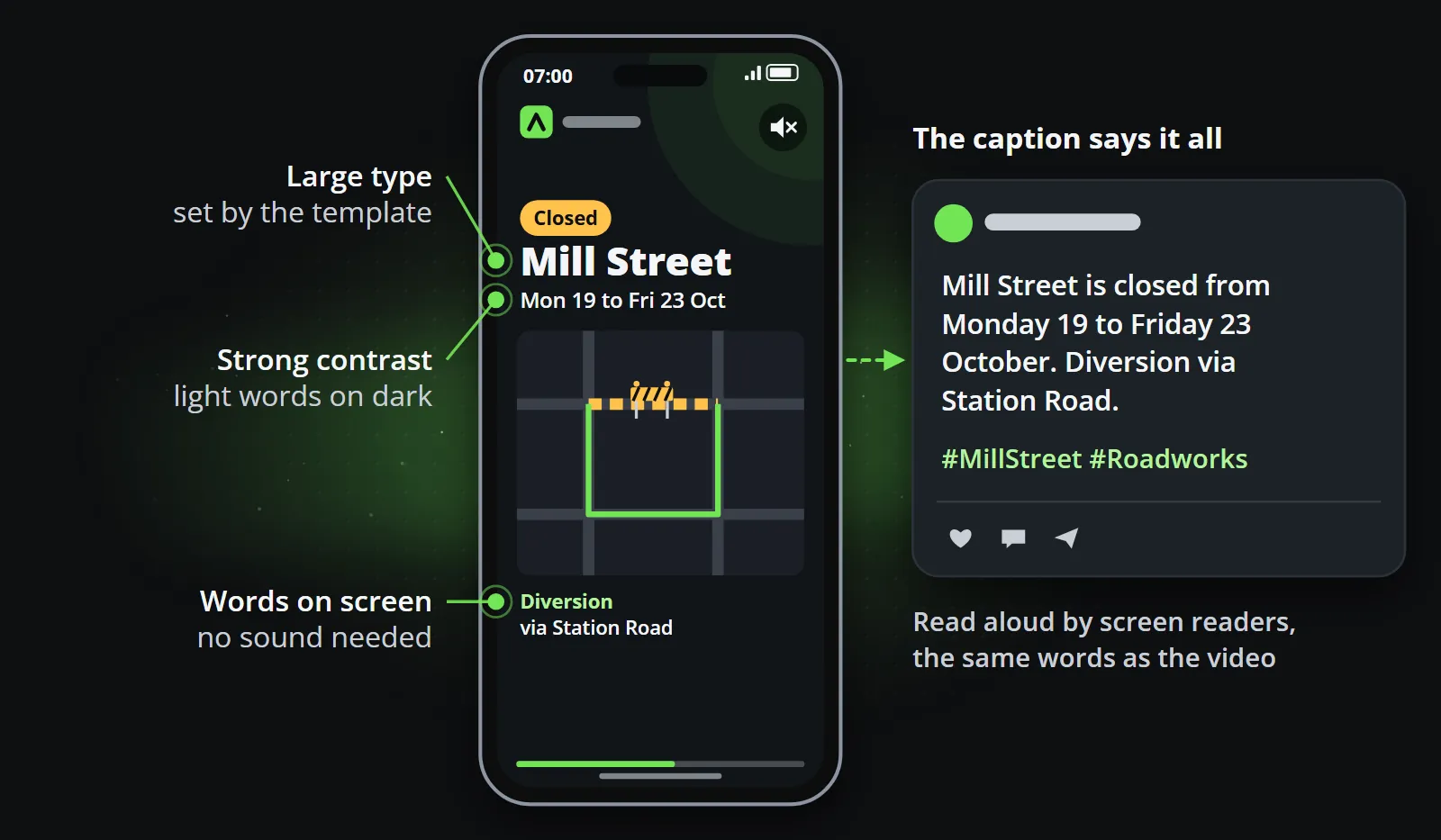
Residents read posts on small screens, often without sound, and some use screen readers or need high contrast. When legible type sizes, strong contrast and on-screen text are properties of the template, every post made from it inherits them. That is different in kind from checking each graphic by hand, which is what usually slips on a busy day. Write the caption so it says everything the video says, and the post works for everybody.
Reaching residents rather than the whole world
A city’s channel is only useful if residents see it. A few habits make a large difference:
- Use the local language everywhere, in the video, the caption and the account’s profile, and add the languages your residents speak. A template draws the same post in each.
- Tag the location on every post where the platform allows it.
- Mention local places by name. Streets, squares and districts residents recognise are the strongest signal that a post is for them.
- Grow the first followers locally, through the city’s website, newsletters, local groups and notices, so the platforms learn who the audience is.
- Check your device and platform policy. Some governments restrict certain apps on official devices: the UK government, for example, banned TikTok on its corporate devices in March 2023 (checked on 14 October 2026). Settle which channels the city uses before it starts. This is not legal advice.
Starting small
Public bodies rarely start with everything, and they should not. The simplest start is a pilot: one department, one recurring notice, for example the waste collection reminder or the roadworks of the week. It is often narrow enough to approve without a procurement round, it shows within a few weeks whether residents respond, and it gives every other department a working example.
Data to video explains how the data reaches the template, and faceless videos for business covers the formats in general.
Bottom line
The day you need the channel is the wrong day to build it. Publish the useful, routine information residents already look for, every day and in their language, so that more of them are following when the warning goes out. With templates approved once and posts handed over without anybody else touching the accounts, a two-person office can do that without working weekends.
To try it, ask about a pilot for one department, or read more on Reelwire for public bodies.
Frequently asked questions
What should a municipality post on social media?
Information residents use: waste collection reminders, roadworks and closures, water levels and weather warnings, public transport changes, opening hours, events, council decisions and election results. Useful routine posts build the audience that later receives urgent ones.
How often should a local government post on social media?
Regularly enough that residents expect it, ideally daily or several times a week. Platforms show content from accounts people engage with, so a steady rhythm of useful posts keeps a city in residents' feeds before an emergency rather than after.
How can a small communications team post every day?
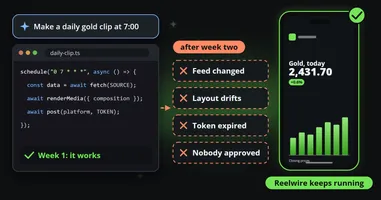
By automating the routine posts. Recurring information such as collection days, roadworks or water levels can be turned into designed short videos from the data automatically, so the team spends its time on the posts that need a person.
Is it safe to automate public sector social media?
It can be, if the design and the wording are approved in advance and the facts come straight from the official data. With templates approved once, every post follows the approved layout, and nobody outside the office needs access to the official accounts.

Co-founder of Reelwire. Every organisation has facts worth showing, its prices, results, releases and warnings, and the vision is that every one of them can show those facts every day, on brand, in every format and language, without a production team behind each post. Your data, in motion: correct, recognisable and consistent from the first clip to the thousandth.