IB Marketing Materials Ready to Post: Activating an Introducing-Broker Network
Every partner who posts nothing is distribution a broker already paid for. Approved daily clips, delivered ready to post, take the making out of posting.

Key takeaways
- A partner network that posts nothing is reach the broker already pays for. The usual IB marketing materials, a banner set, a logo pack and a PDF, are made once, in the wrong shapes, and go stale.
- A hypothesis worth testing: partners stay quiet because posting is work. A finished clip every day, in their language and shape, with the text ready to copy, leaves them only the decision to post.
- With Reelwire's syndication on the Enterprise plan, each group of channels is a page inside the broker's partner portal, where partners, called participants on screen, sign up, confirmed by email, to receive the clips by email or webhook.
- The broker keeps the template, the approval and the risk warning; the partner keeps their own account and audience. Nobody shares a client list or a login.
In many partner networks, a few introducing brokers and affiliates bring in most of the new accounts, while others receive the IB marketing materials and rarely post. Every silent partner is distribution the broker already paid for, in onboarding, in support and in the commission plan.
One likely reason is that posting is still work: the materials are a banner set and a PDF, made once, in the wrong shapes for the platforms where people now scroll. This article is about changing what the partner receives: an approved clip, every day, ready to post, delivered without anybody handing over a client list or an account login.
Why do introducing brokers post nothing?
Only your partners can tell you why they stay quiet, so ask them. These are the reasons worth asking about:
- It takes time they do not have. An introducing broker is busy with clients. Making a post means finding something to say, making it look professional and checking it, every day.
- The materials do not fit. A 728 by 90 banner is not a Reel. A PDF does not go on TikTok. A webinar recording from last month is not news.
- They are unsure what they may say. Financial promotion rules are strict, and a partner who is not sure what is allowed often says nothing, which is the safe choice for them and the expensive one for the broker.
- The language is wrong. A network in five countries gets materials in one or two languages.
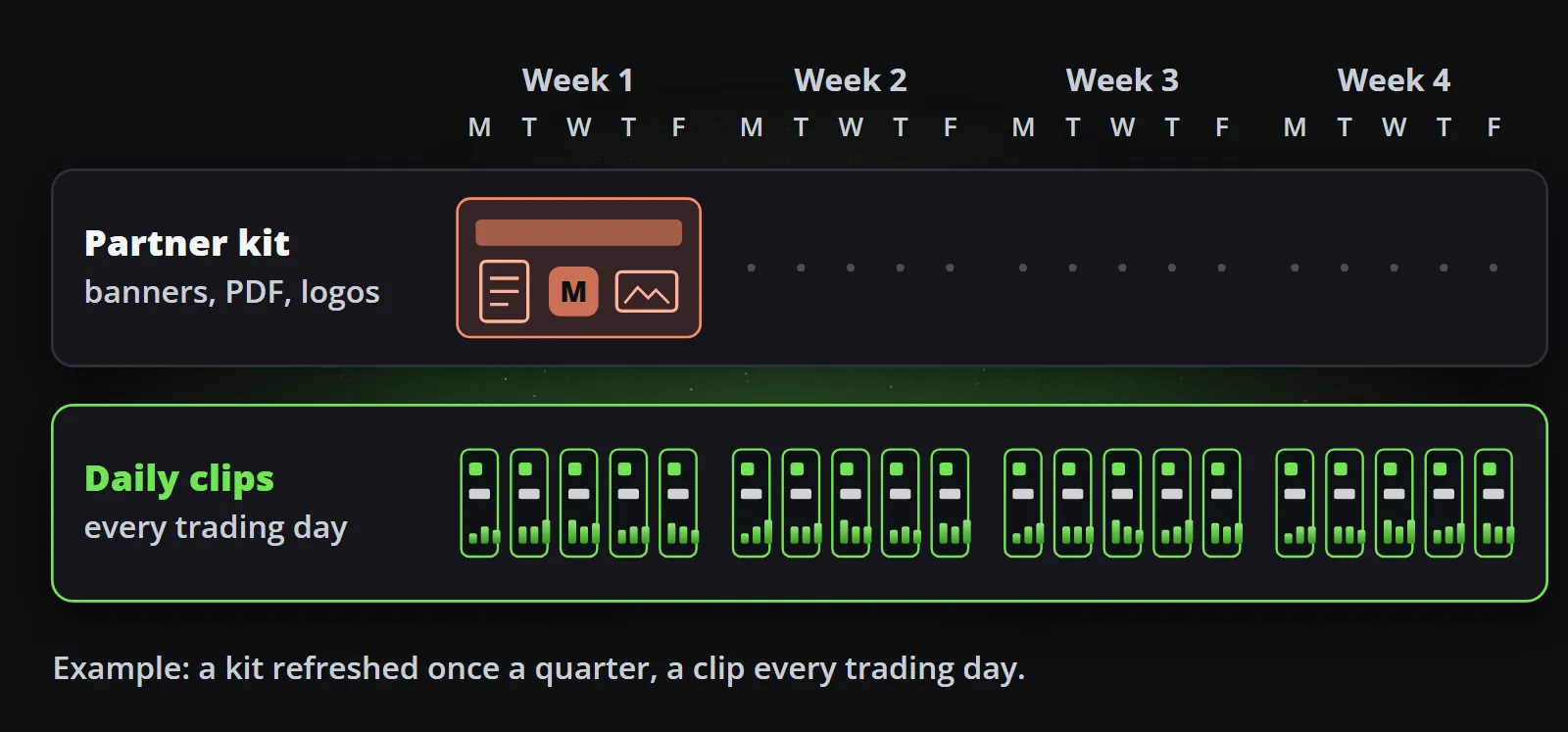
- Nothing new arrives. A kit updated once a quarter gives nobody a reason to post on a Tuesday.
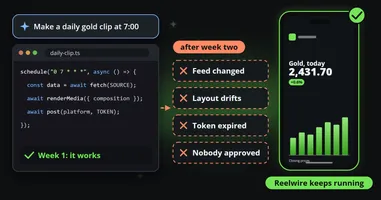
On the broker’s side, the arithmetic is no better. Making a fresh clip for every partner, every day, in every language, by hand, is out of reach for any marketing team, so the kit is refreshed when someone finds the time.
What do IB marketing materials usually contain?
| What the kit holds | What a partner can do with it | How often it changes |
|---|---|---|
| Banners in standard sizes | Put them on a website | When the brand changes |
| A logo pack and brand rules | Make their own posts, if they can design | Rarely |
| A presentation or PDF | Send it to a prospect | Once or twice a year |
| A tracking link or promo code | Add it to anything they post | Once |
| Webinar recordings, research notes | Share them, long after the event | Weekly at best |
| A daily approved clip | Post it as it is, in a minute | Every trading day |
The first five are worth keeping: the link and the code are how partners get paid, and a website still needs banners. What is missing is the one thing a short-form platform rewards: something new, on a schedule, in the platform’s own shape.
Who answers for what partners post?
Before handing partners anything, compliance will ask who is responsible for what they publish. Rules differ by jurisdiction and by how the partner is regulated, but regulators have been paying attention. In the UK, the FCA’s finalised guidance on financial promotions on social media (FG24/1, published on 26 March 2024, checked on 14 October 2026) is written for authorised firms and for “influencers or other affiliate marketers”, and says that an unauthorised person who promotes a regulated product without the approval of an FCA-authorised person may be committing a criminal offence. Elsewhere the details differ. This is not legal advice; your compliance team knows the rules that apply to your licence and your network.
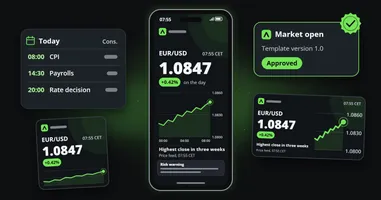
What follows from any version of those rules is the same: a partner improvising posts about markets is a risk, and a partner posting content compliance already approved is a much smaller one. That is the case for giving partners finished clips rather than a logo pack and good wishes. The clip carries the fixed risk warning, the figures come from data, and the template was reviewed before the first clip existed. Daily market update videos for brokers explains how approving a template once covers every clip made from it.
How does syndication deliver approved clips to partners?
Reelwire’s syndication, part of the Enterprise plan, hands a workspace’s posts on to people outside it. On Reelwire’s screens, partners who sign up for them are called participants, and this section uses that word for what the product does. It works in five steps:
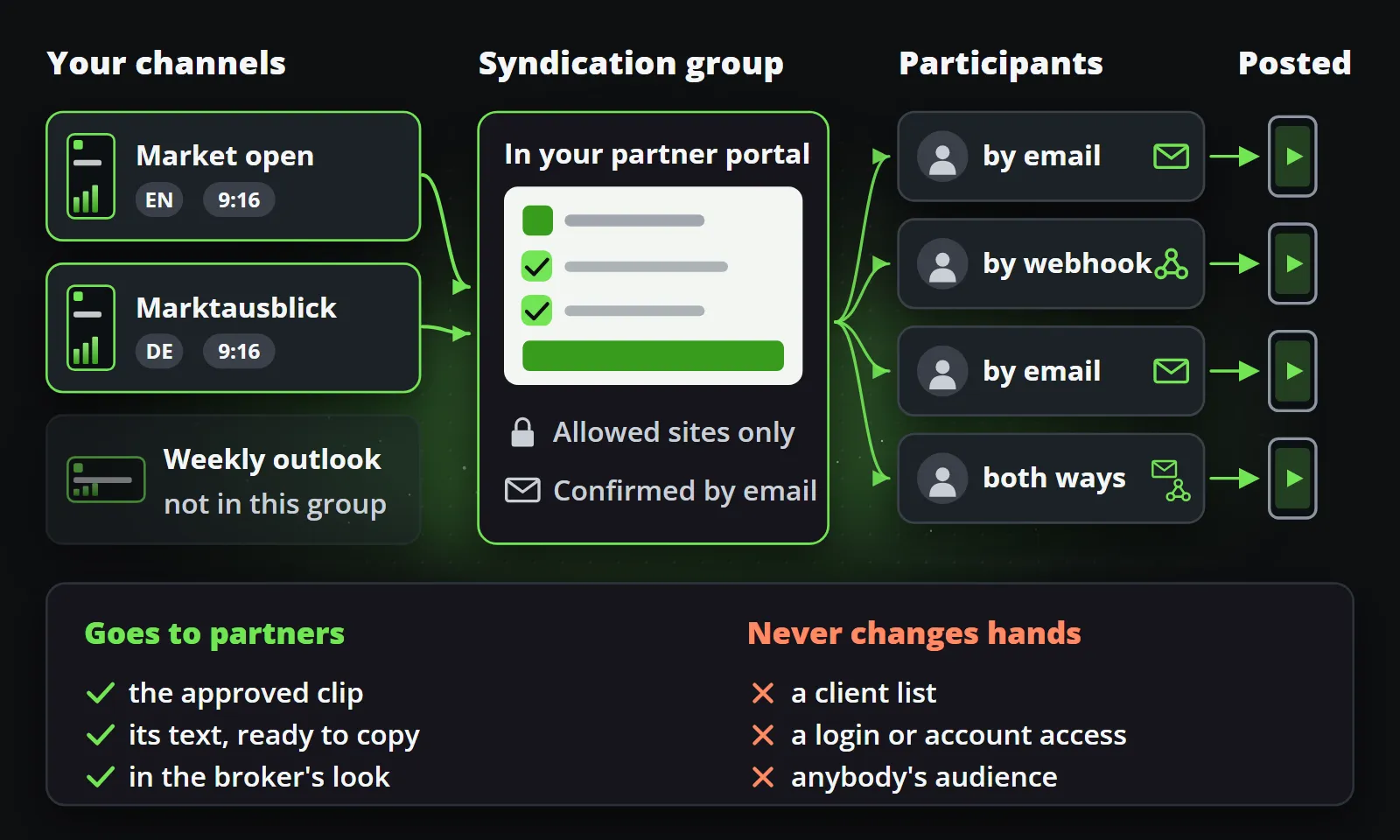
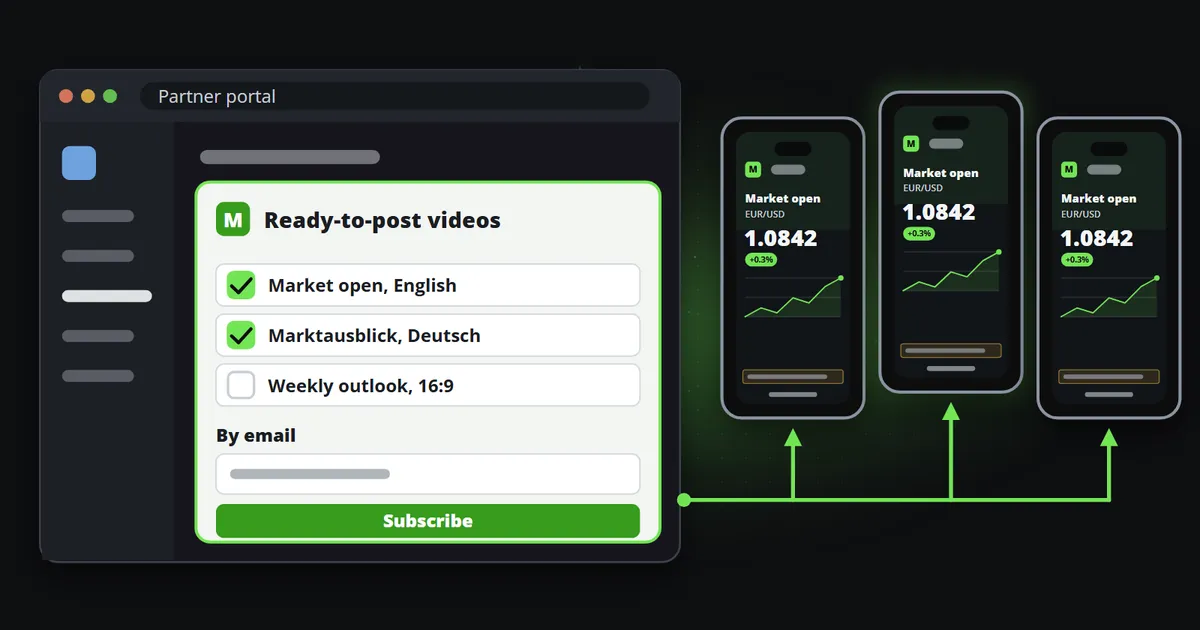
- The broker’s channels. The same channels the broker posts itself, or ones made for partners: a daily market open in English, a German and a Spanish version, a weekly outlook in 16:9. Each channel has its brand, its shape and its language, and listens to the broker’s sources, such as ready-made market feeds, the broker’s own data over the API, or a post list its analysts fill.
- A syndication group. Some of those channels, with a page of its own. The broker’s developer copies the group’s iframe code into the partner portal, on the page where partners should sign up, and names the sites allowed to show it; anywhere else, browsers refuse to show it.
- Participants sign up themselves. In the page they choose the channels they want and give an email address, a webhook address or both, as the group allows. Every subscription is confirmed by email, in two steps, so a mail scanner opening every link cannot subscribe anybody. A webhook also has to answer a test call before anything is sent to it.
- Every post reaches them. When a post of a channel they chose is handed over to the broker, it is passed on to them at the same moment. A channel that needs approval passes its post on only once it is approved, as it does for the broker.
- They post it. By email, a participant gets a short email with a button to the post kit, a page with the video to download or share, the cover, the text with a Copy button and a prompt for an AI assistant. By webhook, their own system gets the same signed call format as the broker’s own, cut to the channels they chose. The webhook guide shows what a receiving system does with it, except its last step: nothing is reported back from participants, so there is no report to send.
Everything participants see wears the broker’s look, not Reelwire’s: the sign-up page, the emails and the post kit carry the broker’s logo, title, colours, font and footer. The emails go from an address on reelwire.io under the broker’s name, or through the broker’s own mail server.
What does the partner see?
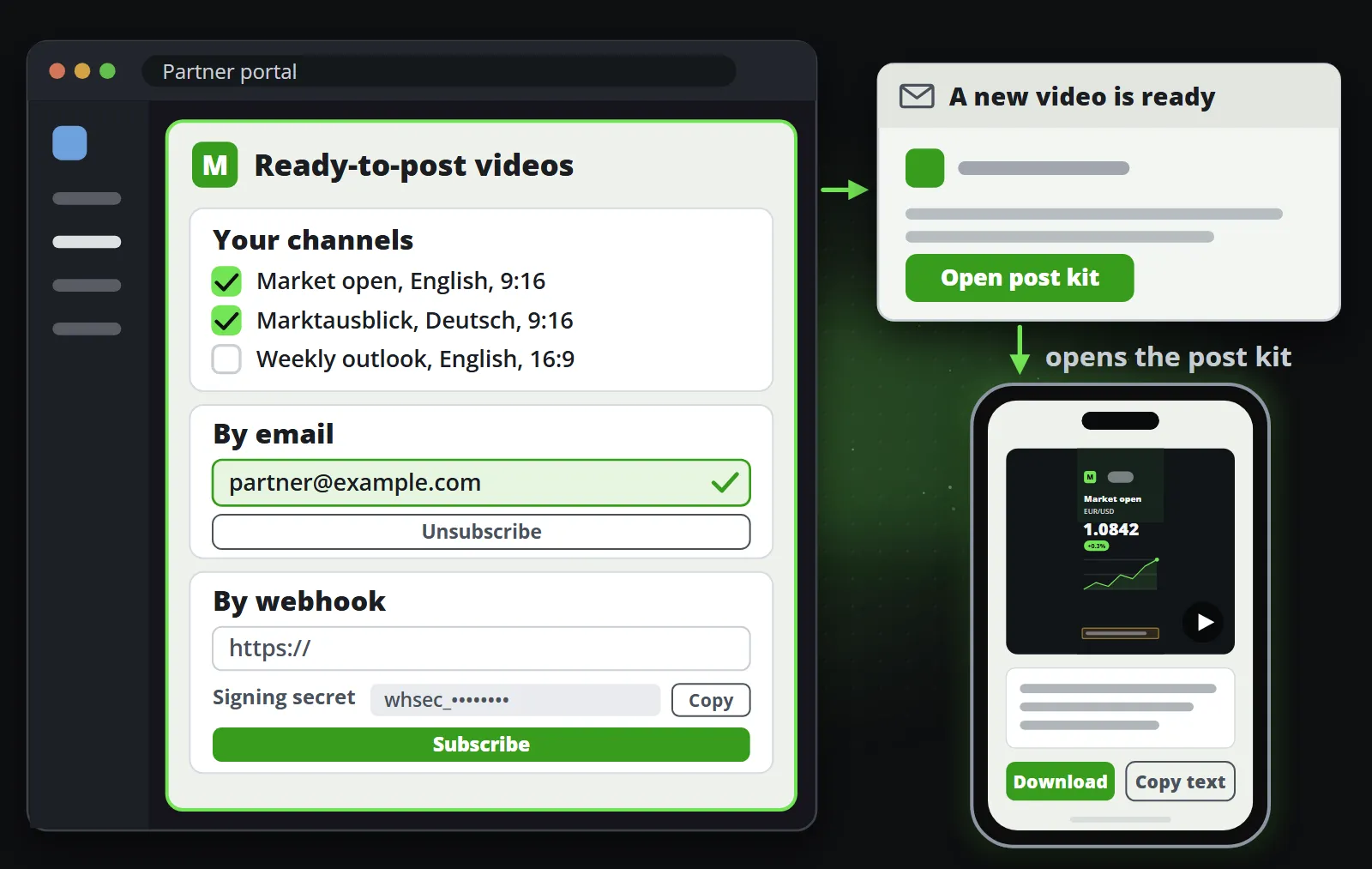
Where the portal knows who is signed in, it can tell the page. The broker’s server signs the participant’s own ID and email address with the group’s portal key, and the page then shows each participant what they receive, without asking them to type anything, while nobody can see or change another participant’s subscription by editing the address. A portal that passes nothing still works: the participant types an address, and the email that follows proves it is theirs.
Some ways brokers can set up their groups:
- By language. One group per language, each shown to the partners of that market by the portal’s own rules.
- By tier. A group with every channel for the most active partners, a smaller one for the rest.
- One large partner. A group with one channel, made for that partner, on their page only. With one channel there is nothing to choose: they give an address and receive it.
What partners keep, and what the broker controls
| The broker controls | The partner keeps |
|---|---|
| The templates, and their approval | Their own account and their own audience |
| The risk warning, fixed in every clip | When to post, and whether to |
| The brand on every clip | Their own words and link, where the partner agreement allows |
| Which channels each group offers | Which of those channels they take |
| Which sites may show the sign-up page | Their email address or webhook, changed when they like |
| Blocking a participant, at once | Unsubscribing, confirmed by email |
What nobody hands over: the broker sees no partner’s clients, partners see no broker’s clients, and no login changes hands. A partner who posts the clip as it arrived posts what compliance approved. If the agreement lets partners add their own caption, the agreement, not the software, is where the rules for those words belong.
Setting it up, in six steps
- Decide the channels partners should receive, by language and shape, and make them if they do not exist yet.
- Set the branding and the email settings for everything partners see: logo, title, colours, font, footer, and the address emails come from and replies go to.
- Make the groups, by language, tier or partner, each with its channels and whether it hands over by email, by webhook or both.
- Build it into the portal: copy the iframe code, name the allowed sites, and, if the portal knows its partners, sign their ID and email address on the server.
- Tell partners it is there. They sign up in the portal and confirm by email; the broker can also add a participant by hand, who still confirms their own address.
- Watch the syndication log, which lists every email and webhook call with its status, Sent or Success, retrying, or failed, and Send again for any line.
How many partners, and what does it cost?
Syndication is part of the Enterprise plan, quoted for your network, with the videos, seats and syndication participants it needs: ask Reelwire to size yours, and the plans page lists what Enterprise includes. The participant allowance counts everybody who can receive something, across all of a broker’s groups, and is also how many groups a broker can have.
Partners do not multiply the rendering. Each clip is made once for the broker’s channel and passed on to every participant who chose that channel, so a network of a hundred partners receiving the daily market open uses the same videos as the broker posting it alone.
What should a broker measure?
Be clear about what the system knows. Nothing a participant does is reported back to Reelwire: the syndication log shows whether each email was sent and each webhook call answered, not whether the clip was posted or what it earned. The result shows where it always has, in each partner’s tracking link and the broker’s own partner reports. A sensible test is a few months with a group of willing partners, compared with the same partners’ months before, with the usual caution that markets and seasons move those figures too.
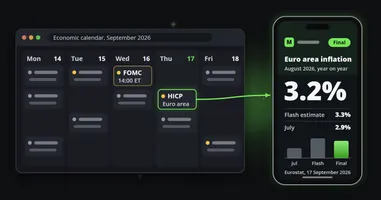
The economic calendar is a good daily material to start with, because it is factual, scheduled and the same for every partner in a market: economic calendar videos shows a week of it.
Bottom line
A partner network is distribution a broker has already paid for. Where it stays quiet, a likely reason is the work the materials leave to partners: design, write, check, translate, every day. Approved clips that arrive ready to post take that work away: the broker’s compliance stays in control of every frame, the partner keeps their account, their audience and the decision to post, and nobody shares a client list or a login.
To see a day of your channel on your own instruments, send three symbols and it comes back on your brand, or read more on Reelwire for finance.
Frequently asked questions
What are IB marketing materials?
The content a broker gives its introducing brokers and affiliates to promote it: usually banners in standard sizes, logos, a presentation or PDF, tracking links and promo codes, sometimes webinar recordings or research notes. Daily short-form video is rarely part of the kit, because producing it by hand for a whole network does not scale.
Why might introducing brokers not post the materials they are given?
Only the partners can say, so ask them. Likely reasons are that posting still takes work, that the materials are static and made for websites rather than short-form platforms, often in one language, and that partners are unsure what they may say. A finished, approved clip every day takes away the making; whether a partner posts it is still their decision.
How can a broker give partners videos without access to their accounts?
With Reelwire's syndication, partners sign up on a page the broker embeds in its partner portal and receive each finished clip by email, with a page to download or share it, or by a signed webhook to their own system. They post it on their own accounts; the broker never needs their logins and they never see the broker's clients.
Can the broker see whether a partner posted the clip?
Not through Reelwire: nothing a participant does is reported back, and the syndication log shows only whether each email was sent and each webhook call answered. The results show where they always have, in the partner's tracking link and the broker's own partner reports.
Is a broker responsible for what its affiliates post?
It depends on the jurisdiction and the arrangement. In the UK, for example, the FCA's guidance on financial promotions on social media covers influencers and other affiliate marketers. This is not legal advice and reflects the guidance as checked on 14 October 2026; ask your compliance team which rules apply to your network.
What does syndication cost?
Syndication is part of Reelwire's Enterprise plan, quoted for your network: the videos, seats and syndication participants it needs, and their price, are worked out together. Partners receive the clips made for the broker's channels, so they do not use up extra videos.

Co-founder of Reelwire. Every organisation has facts worth showing, its prices, results, releases and warnings, and the vision is that every one of them can show those facts every day, on brand, in every format and language, without a production team behind each post. Your data, in motion: correct, recognisable and consistent from the first clip to the thousandth.